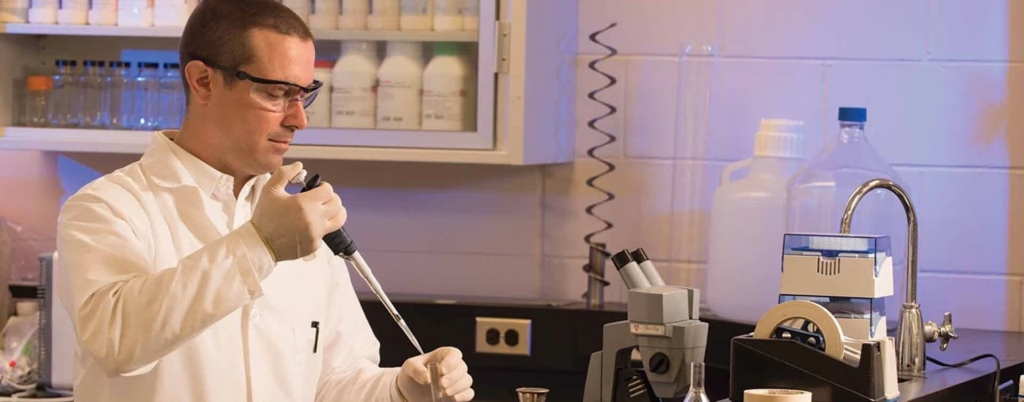
- A pilot plant tests a process at a scale between small lab experiments and full commercial production, generating the real data a business needs before committing to a full production line.
Read full summary ▾
- AURI’s Anaerobic Digestion Pilot Plant runs two 1,250-gallon tank digesters with roughly 1,100 gallons of working volume each, along with real-time gas monitoring.
- AURI’s Grains and Oilseeds Processing Laboratory is a 1,500-square-foot, FDA-approved facility built for pilot-scale cereal, pulse, and oilseed processing.
- Pilot data can directly shape investment decisions, like helping calculate a projected minimum selling price for a full commercial-scale facility.
This guide walks through what a pilot plant is, how it fits between lab-scale research and full commercial production, and why agricultural and biobased businesses rely on this stage before scaling up. It also looks at the specific pilot-scale facilities AURI operates through its Bioindustrial Innovation Center, and what getting started with pilot-scale testing typically involves.
A pilot plant is the testing ground between a lab bench and a commercial production line. It’s where a food ingredient, a biobased product, or a renewable energy process gets tested at a larger, more realistic scale, so a business can see how it performs before committing to build or lease full production space.
This guide covers what a pilot plant does, how it fits into the path from concept to commercial product, and what pilot-scale facilities AURI offers agricultural and biobased entrepreneurs.
We’ll discuss the following:
- What is a pilot plant?
- How is a pilot plant different from a lab or a full-scale plant?
- Why do agricultural and biobased businesses use pilot plants?
- What can you test at a pilot plant?
- What pilot-scale facilities does AURI offer?
- Frequently Asked Questions (FAQs)
If you’re ready to test a process at pilot scale, our Bioindustrial Team can help you plan and run that work at our facilities.
What is a pilot plant?
A pilot plant is a facility that runs a process at a scale between small lab experiments and full commercial production. This mid-scale approach is used across federal facilities, including a network of USDA pilot plants built specifically for agricultural and food research.
Businesses use pilot plants to see how a formula, process, or piece of equipment behaves before committing to a full production line. The scale varies a lot by industry and product. A pilot batch might be a few gallons or several tons, depending on what’s being tested and why.
How is a pilot plant different from a lab or a full-scale plant?
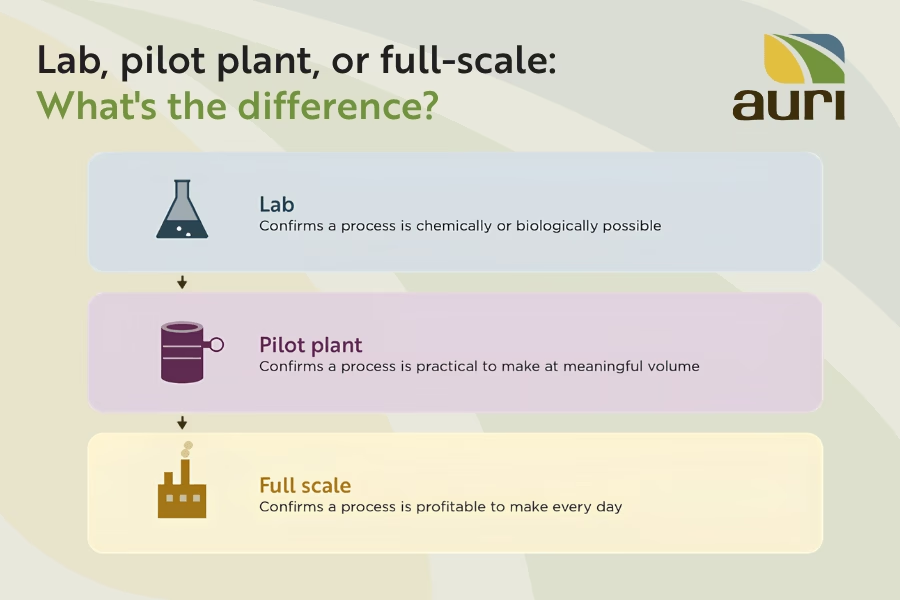
Lab work, pilot-scale testing, and full commercial production sit on a continuum.
Each stage answers a different question:
- A lab bench tells you whether an idea is chemically or biologically possible.
- A pilot plant tells you whether it’s practical to make at a meaningful volume and can be replicated.
- Full-scale production tells you whether it’s profitable to make every day.
Federal research agencies formalize this continuum through readiness level frameworks. USDA’s National Institute of Food and Agriculture requires a Technology Readiness Level assessment for certain crop research proposals, scoring a technology from early discovery through commercial deployment.
Researchers have also proposed a bioindustrial-specific version of this idea, called bioindustrial manufacturing readiness levels. It describes how bioproduct manufacturing processes mature from lab concept to commercial scale.
Pilot-plant work typically sits in the middle of these scales. It comes after basic research, but before a technology is ready for full commercial rollout.
Why do agricultural and biobased businesses use pilot plants?
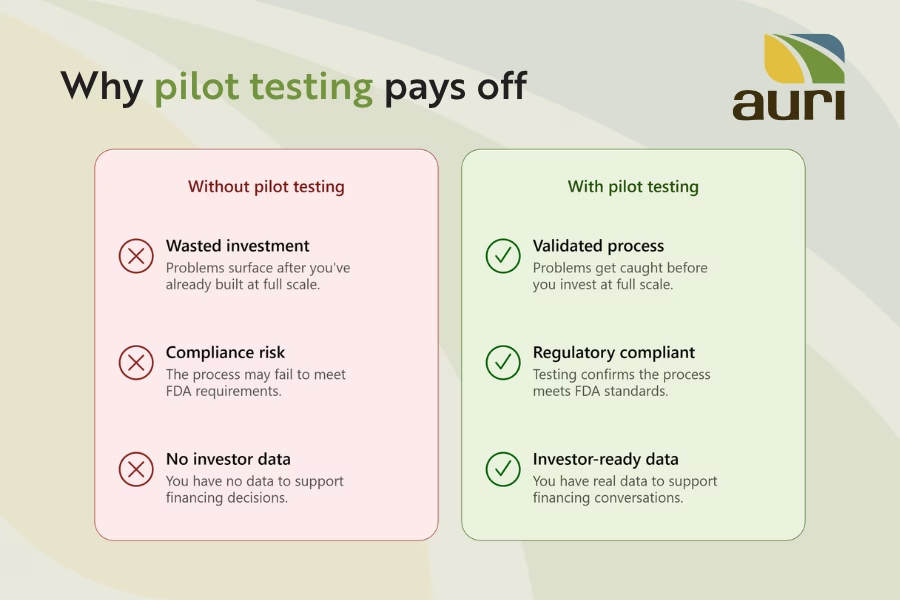
Businesses use pilot plants to catch problems while they’re still cheap to fix, meet regulatory requirements, validate processes, develop products for test marketing, and generate the data that investors and partners need.
A closer look at each of those:
Catching problems before full-scale investment
Scaling a process from a lab beaker straight to a commercial line often reveals issues that never showed up at small scale, from equipment behavior to product consistency. A pilot run surfaces those issues first.
One study tested the same digestion process at both lab and pilot scale, with and without mixing. At lab scale, mixing made no real difference. At pilot scale, it did. In other words, a factor that looked irrelevant in the lab turned out to actually matter once the process was tested at a larger, more realistic size. That’s exactly the kind of blind spot a pilot plant is built to catch, one a lab-scale test alone would have missed.
Meeting regulatory standards
Food products headed for commercial sale need to meet FDA manufacturing standards. Pilot runs help confirm a process can meet those standards before a business builds or leases full production space. However, note that this does not apply to all pilot-scale product development processes.
Generating data for investors and partners
For renewable energy and biobased processes, pilot data gives investors and partners solid numbers to evaluate. In one federal biorefinery program, pilot plant trial data was used to calculate a projected minimum selling price for a full commercial-scale facility. That data can cover throughput, yield, and cost, the details a full-scale investment decision actually depends on.
AURI’s Ag Innovation E-Newsletter covers new research, facility updates, and success stories from across Minnesota’s agricultural and biobased sectors. If you’re tracking how ag innovation moves from concept to commercial scale, subscribing is the best way to keep up.
What can you test at a pilot plant?
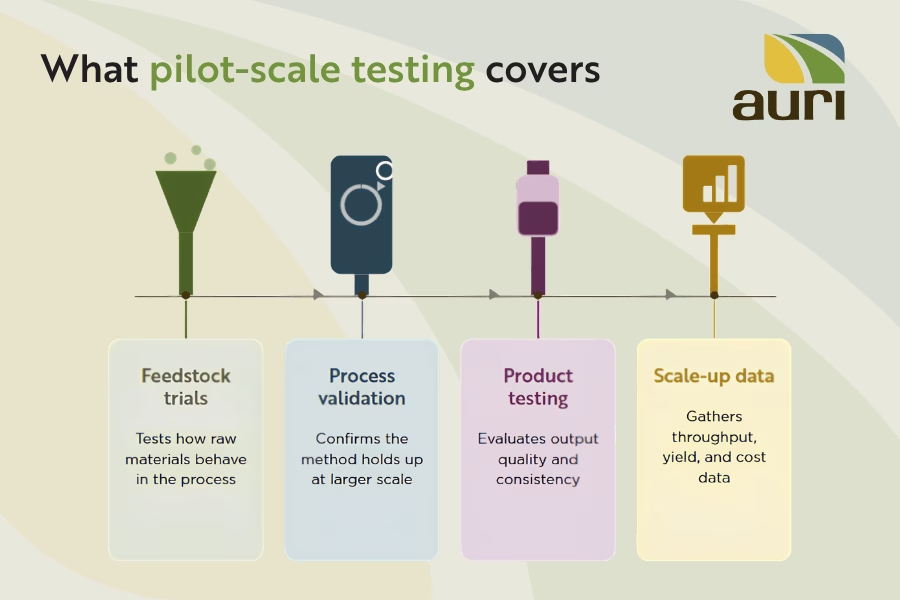
Common uses of a pilot plant include:
- Feedstock trials. Testing how different raw materials, including agricultural byproducts and combinations like food waste and manure, behave in a given process.
- Process validation. Confirming that a method holds up at a larger scale, with equipment and realistic timing.
- Product and material testing. Evaluating finished output for quality, consistency, and performance.
- Scale-up data collection. Gathering the throughput, yield, and cost data needed to plan a full commercial facility.
What pilot-scale facilities does AURI offer?
AURI’s Bioindustrial Innovation Center houses three pilot-scale facilities, each built around a different part of the agricultural value chain. Together, they cover renewable energy, coproduct valorization, and food ingredient processing.
Anaerobic Digestion Pilot Plant
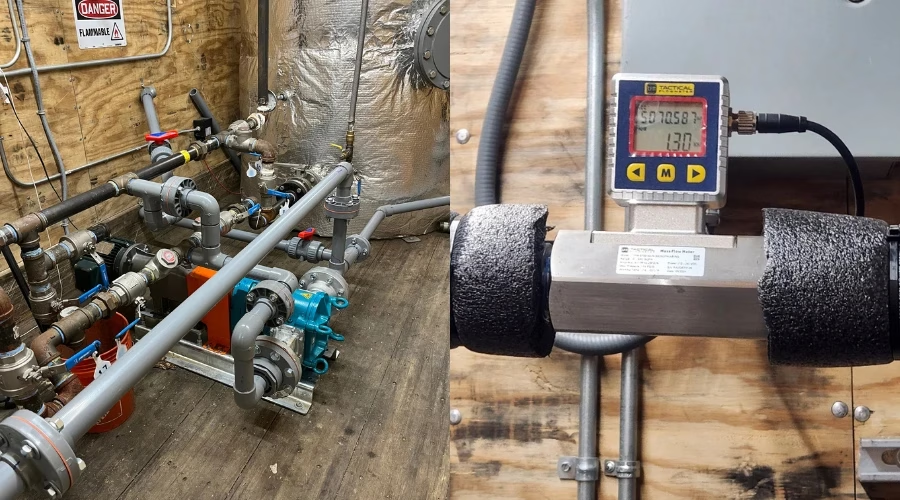
AURI’s Anaerobic Digestion Pilot Plant includes two 1,250-gallon tank digesters, each with about 1,100 gallons of working volume. The digesters run independently or in tandem, with separate mechanical and hydraulic mixing systems and real-time monitoring of gas production, pressure, temperature, and flow. Two feeding systems allow for blending different feedstocks for co-digestion studies, supporting biogas and renewable energy work.
Biomass and Fiber Processing Laboratory
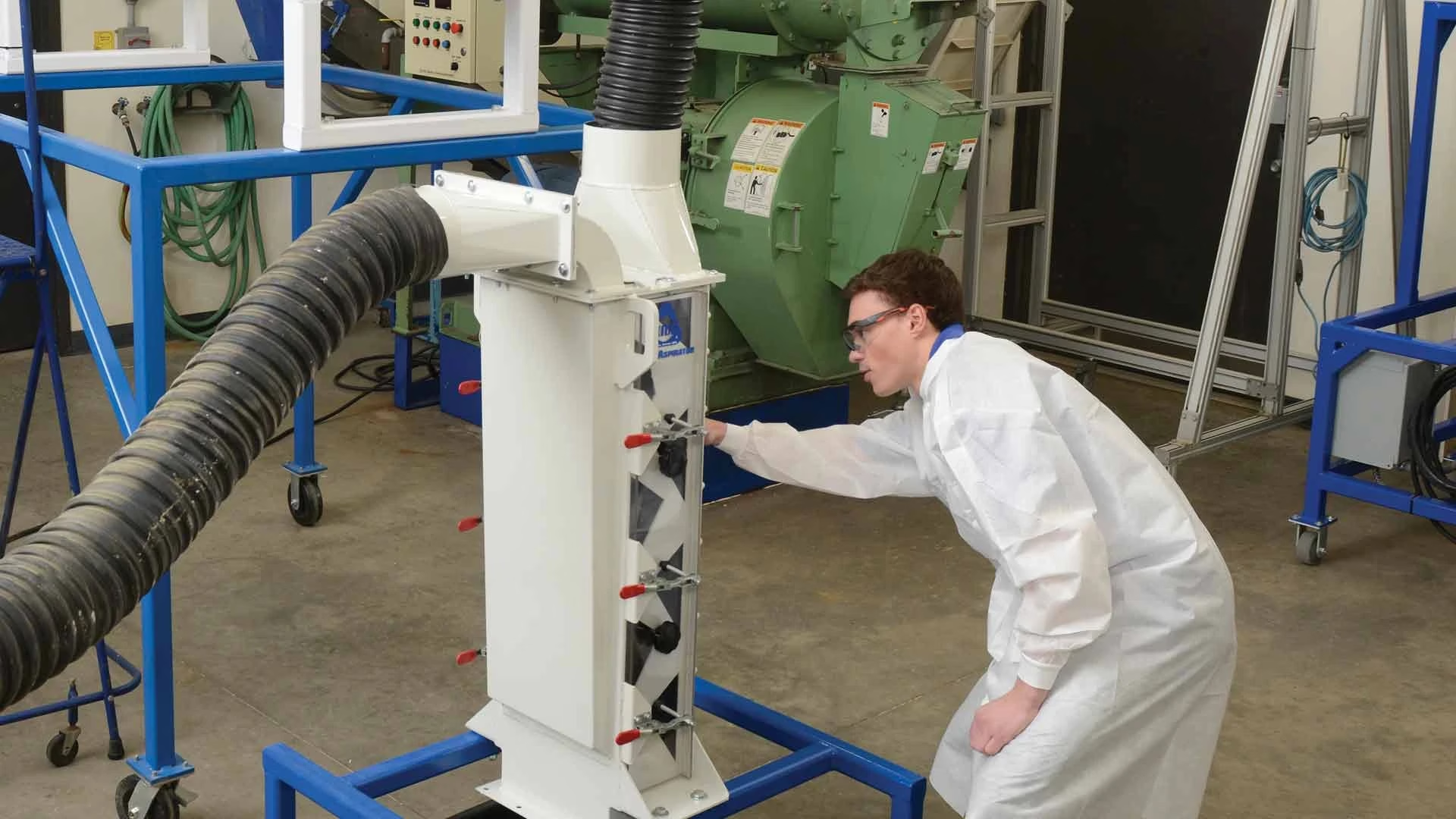
AURI’s Biomass and Fiber Processing Laboratory converts raw agricultural materials and coproducts into engineered intermediates through grinding, milling, and other size-reduction processes, followed by densification and pelleting.
It also handles biomass deconstruction, including fiber separation and classification, which allows materials like hemp stalks to be broken down into fibers and other functional components for further coproduct development.
Grains and Oilseeds Processing Laboratory
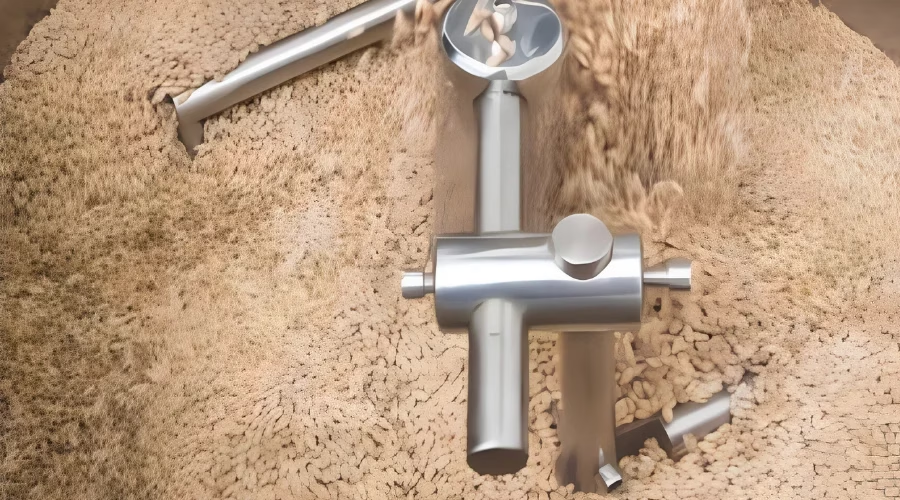
This 1,500-square-foot, FDA-approved Grains and Oilseeds Processing Laboratory is designed for small-scale processing of cereals, pulses, and oilseeds. Typical operations include cleaning, dehulling, milling, fractionation, and mechanical oil expelling, supporting new industrial and food ingredient development. Flexible, mobile equipment reconfigures quickly for different crops and product concepts.
A conversation about your process, your feedstock, and what you need to learn is where every project starts. AURI’s Bioindustrial team supports work across biogas, biomass coproducts, and grain and oilseed ingredients, helping entrepreneurs, cooperatives, and existing businesses find the right facility and services.
Frequently Asked Questions (FAQs)
What is the difference between a pilot plant and a lab-scale test?
A lab-scale test confirms whether a process works at all, usually with small equipment and small batches. A pilot plant tests that same process at a larger, more production-representative scale, generating the throughput and consistency data needed to plan full commercial production.
How much does pilot-scale testing cost?
Costs depend on the facility, equipment, and length of the project. AURI’s service fee structure depends on the type of assistance provided, so it’s best to talk directly with AURI’s team about a specific project.
Can a small business or startup use a pilot plant?
Yes. Pilot plants exist specifically so smaller businesses and startups can test a process before investing in their own full-scale equipment. AURI’s facilities are built to support entrepreneurs and small companies working through that stage of development.
What industries rely on pilot plants?
Pilot plants are common across food and beverage manufacturing, chemicals, pharmaceuticals, biofuels, and biobased materials. Any industry where scaling up carries technical or financial risk tends to use pilot-scale testing before full commercial rollout.
Does AURI charge for access to its pilot plant facilities?
AURI operates on a service fee structure rather than free public access, though the specific fee depends on the scope of work involved. AURI’s team can walk through pricing details for a given project.