Biogas
Industry Solutions

Biogas

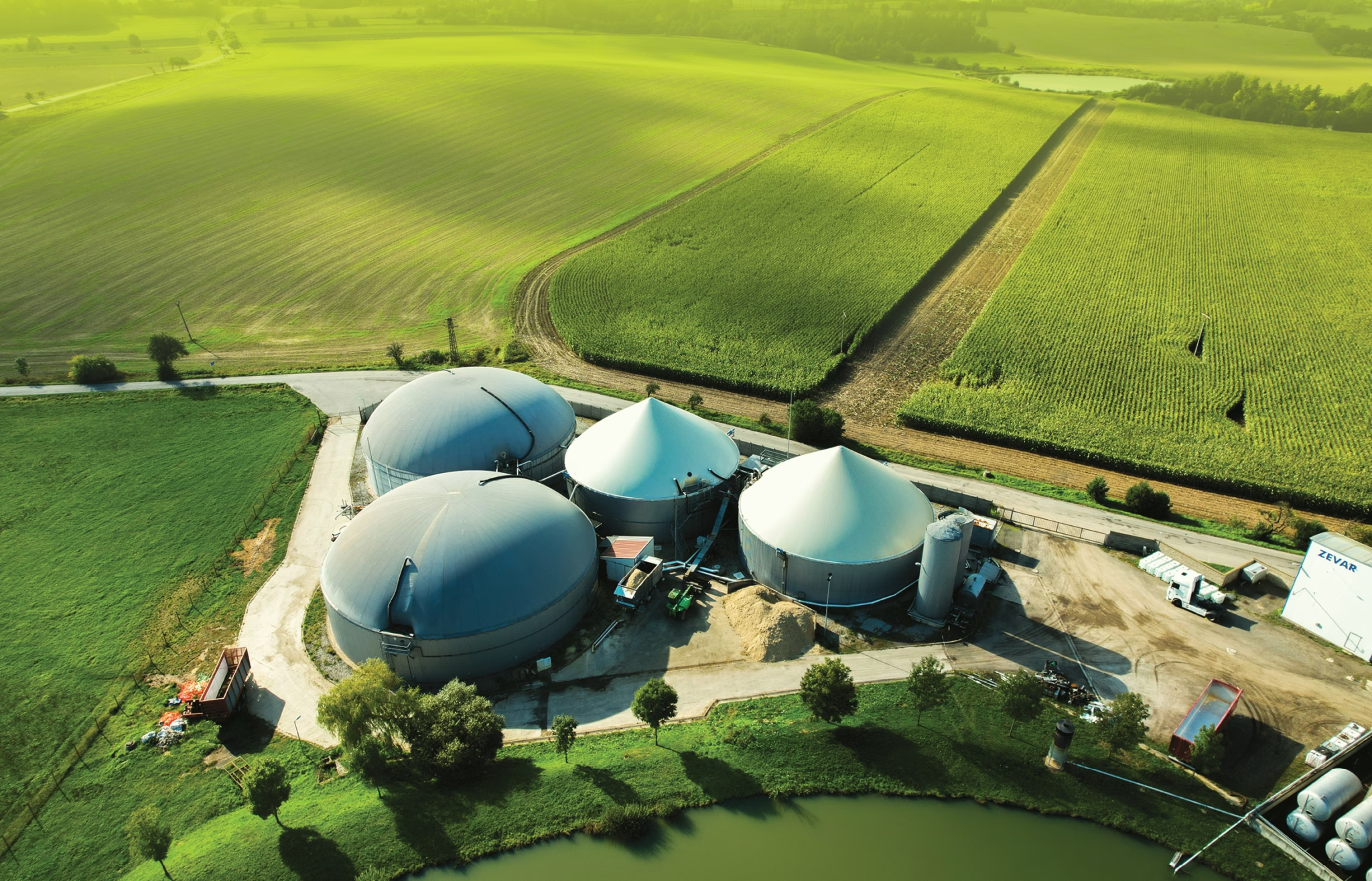
AURI supports the anaerobic digestion and renewable natural gas industry by providing applied testing, pilot-scale capabilities, and project assessment services that inform design and investment decisions. 

Overview

We generate project-specific data on feedstocks, digestion performance, digestate outcomes, and project viability. These results are translated into actionable guidance for development, engineering, and operations.

We work with project developers, utilities, municipalities, producers, food and agricultural processors, and technology providers throughout the project lifecycle—from early screening through scale-up support and troubleshooting. 

Our testing protocols align with regulatory requirements and industry standards, and deliverables are structured to support decision-making, financing documentation, and permitting processes. Results may include measured biomethane potential, observed operating constraints, digestate and coproduct characterization, and techno-economic analysis based on test data and stated assumptions.

Benefits of Working with AURI:

  • Blended commercial and technical approach
  • Process testing from test tube, flask, to 1,200-gallon digester tanks
  • Access to feedstocks 
  • Industry connections and networks

Services

AURI’s services are most valuable during feasibility assessment, preliminary engineering, and operational troubleshooting phases. Early engagement allows testing results to inform decisions before substantial economic commitments, while pilot-scale work can reduce technical risk for owners, lenders, and investors.

Compositional testing, as needed: total solids, volatile solids, chemical oxygen demand, total Kjeldahl nitrogen (TKN), ammonia, sulfur, ash/minerals, fibers, fats/oils/grease, and selected inhibitors or contaminants, as relevant

  • Availability assessment: location, quantities, expected variability, and practical economic considerations such as transport, handling, and seasonal fluctuations
  • Handling and preprocessing guidance: reception, preprocessing, storage, pumping, and mixing implications based on feed properties

  • Biochemical methane potential (BMP) testing to estimate methane yield and production rate under specified conditions
  • Co-digestion evaluation to examine candidate blend ratios and identify potential benefits or risks (i.e., nutrient balance, buffering capacity, and inhibition indicators)
  • Interpretation that links results to realistic full-scale operating conditions, using appropriate inocula and clearly stated test limitations

  • Laboratory and pilot digestion runs (approximately 5 to 5,000 liters) to evaluate performance beyond BMP tests, including steady-state behavior under repeated feeding
  • Operating window evaluation: organic loading rate, temperature regime, mixing approach, trace nutrient needs, and sulfide management considerations
  • Stress and upset screening, when useful: feed interruptions, loading changes, pH and alkalinity drift, ammonia stress, and high-lipid conditions
  • Monitoring and performance tracking, as appropriate: biogas production rate and composition, volatile fatty acids, alkalinity, ammonia, and solids reduction
  • Scale-up considerations: identification of parameters that may change with scale and those likely to remain similar, with uncertainties noted
  • Quality assurance protocols ensure data reliability for engineering design and regulatory documentation

  • Agronomic and nutrient characterization: nitrogen, phosphorus, and potassium speciation as needed, salinity, micronutrients, and indicators relevant to nutrient availability and plant uptake
  • Pathogen and contaminant testing appropriate for land application permits and regulatory compliance
  • Handling and separations evaluation: dewatering behavior, separation technology assessment (centrifuge, screw press, belt press), and downstream handling considerations
  • Market assessment support: evaluation of digestate as soil amendment, compost feedstock, or other value-added products
  • Coordination with regulatory requirements for agricultural use and nutrient management planning

Measurement-based assessment of common performance issues, including instability, inhibition, foaming, mixing limitations, and sulfur-related challenges

  • Recommendations for corrective actions, which may include feed management changes, nutrient or alkalinity adjustments, solids management, and monitoring improvements
  • Site visits and on-site sampling when appropriate to characterize operating conditions
  • Follow-up testing to evaluate whether changes achieve the intended outcome before broader implementation

  • Techno-economic analysis (TEA) based on measured yields, observed operational considerations, and clearly defined design assumptions
  • Scenario and sensitivity analysis for key drivers such as feedstock availability and pricing, tipping fees, product pathways (renewable natural gas for pipeline injection or vehicle fuel, combined heat and power, or thermal applications), attribute (i.e., RIN, LCFS, RTC, etc.) valuations, integration options, digestate management, and downtime assumptions
  • Cost estimate framing appropriate to project stage, with uncertainty ranges and key assumptions stated (for example, early screening versus pre-engineering or investment decisions)
  • Analysis structured to support financing discussions, grant applications, and investment decision-making

Our Team

AURI’s Food scientists are available to provide consulting and technical services in the areas of product and process development, product evaluation and testing, sourcing materials, equipment and services

Alan Doering
Senior Scientist, Coproducts
Jimmy Gosse
Senior Scientist, Biobased & Renewable Energy
Matthew Leiphon headshot
Project and Industry Insights Manager
Brad Matuska headshot
Business Development Director of Biomass Feedstocks
Camren Nikoley
Bioindustrial Lab Associate
Photo of John Sorensen
Bioindustrial Facilities Manager
Photo of Shelby Thooft
Associate Scientist, Chemistry
Jennifer Wagner-Lahr
Senior Director of Business Development and Commercialization
Photo of Luca Zullo
Sr. Director of Science and Technology

Facilities

AURI’s laboratories are available to clients for hands-on testing and development.
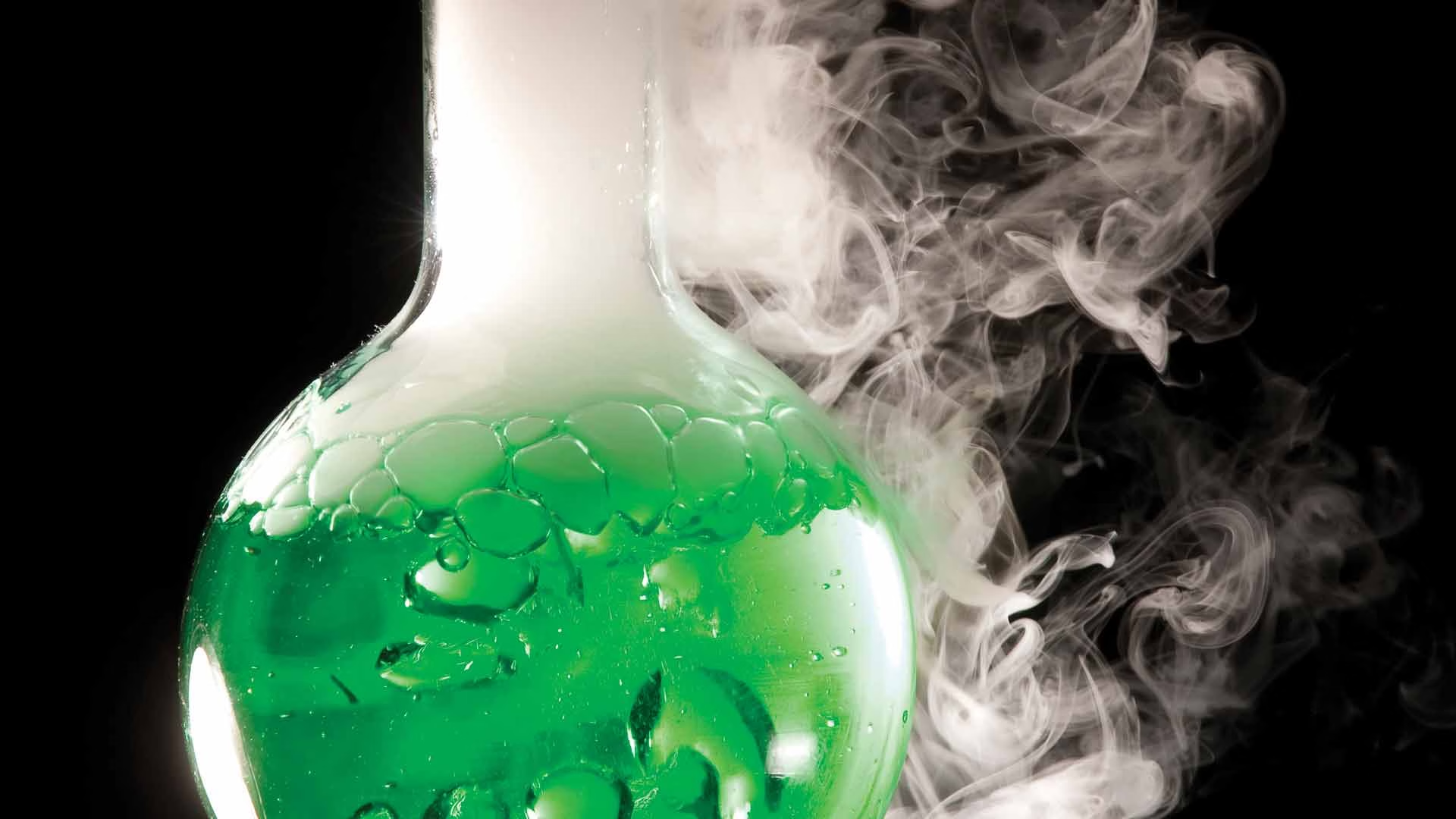
Preparatory and Synthetic Chemistry Laboratory

Applied Biology Laboratory 

The Applied Biology Laboratory focuses on developing bench-scale biological process, especially for anaerobic systems.

Preparatory and Synthetic Chemistry Laboratory

Anaerobic Digestion Pilot Plant 

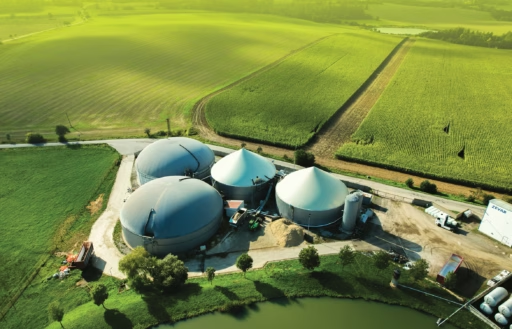
The Anaerobic Digestion Pilot Plant includes two 1,250-gallon tank digesters, each with approximately 1,100 gallons of working volume.
field
See How We Can Partner to Make Your Idea a Reality
Ava - Accessibility Widget