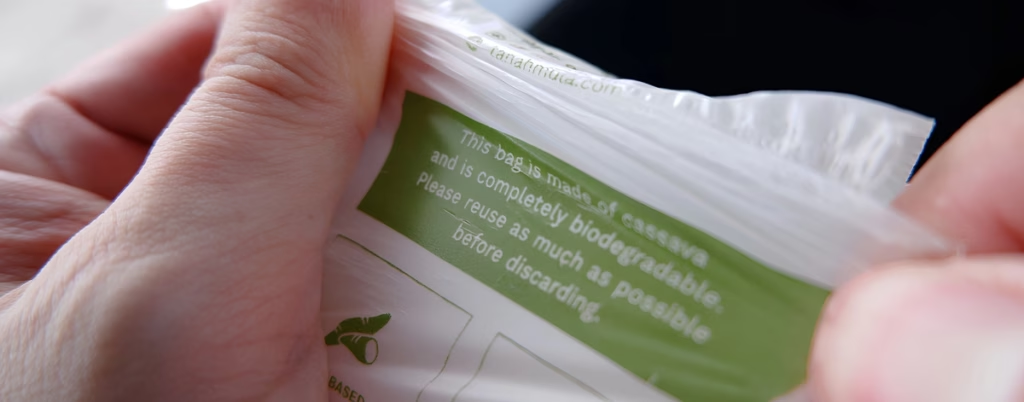
- Biodegradable plastic breaks down through microorganisms into water, carbon dioxide, and biomass, a different process than petroleum-based plastic that simply fragments over time.
Read full summary ▾
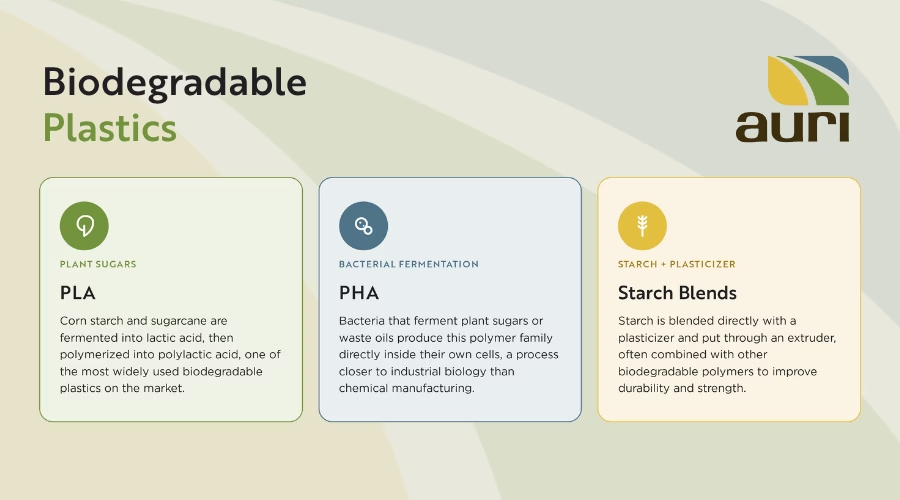
- Three material types dominate the category: PLA (made from fermented plant sugars), PHA (produced through bacterial fermentation), and starch-based blends, each made through a different process.
- The material comes with real pros and cons that go beyond perceived sustainability, covering cost, performance, and how it’s actually made.
- Choosing the right material for a specific application depends on the disposal environment, performance requirements, and cost, not just on which option sounds the most sustainable.
This piece breaks down what makes a plastic biodegradable, the feedstocks and manufacturing steps behind it, and the cost, infrastructure, and pros and cons manufacturers should consider when switching materials.
Biodegradable plastic is plastic that naturally occurring microorganisms, under the right conditions, can break down into water, carbon dioxide, and biomass, not plastic that just degrades into smaller pieces. But there’s a lot more to tackle than that definition alone, including what it’s made of, how it’s produced, and Minnesota’s own history working with it.
Here’s everything covered below:
- What is a biodegradable plastic?
- What is biodegradable plastic made of?
- How are biodegradable plastics made?
- What are the pros and cons of using biodegradable plastics?
- How do you evaluate a biodegradable plastic for a specific product?
- Frequently Asked Questions (FAQs)
If PLA, PHA, and starch-based plastics are new territory for you, AURI’s Ag Innovation E-Newsletter tracks the biobased materials research and Minnesota industry developments in this space as they happen.
What is a biodegradable plastic?
A biodegradable plastic is one that naturally occurring microorganisms, like bacteria and fungi, can break down into water, carbon dioxide, and biomass, given enough heat, moisture, and oxygen to do so. Those conditions vary by material. Some plastics break down in a home compost bin, but most need an industrial composting facility instead, where sustained temperatures around 58°C (about 140°F) drive the breakdown.
That’s a meaningfully different process than a plastic’s simple mechanical breakdown into smaller pieces, which is what happens to most conventional plastic over a – often long – time. It doesn’t disappear and can persist in soil and water for hundreds or potentially thousands of years.
What is biodegradable plastic made of?
Biodegradable plastic derives mostly from the bacterial fermentation of carbohydrates, typically simple sugars obtained from plants, either directly – such as in sugarcane sugar – or by breaking down starch from corn or other starchy crops.
Increasingly, modified starch is blended with other biobased materials such as glycerol to create biodegradable plastics that require no microbial fermentation. Which one a manufacturer uses affects cost, durability, and depends on the intended performance such as mechanical strength, resistance to temperature, permeability to moisture and gases which in turn depends on the final use of the product made with the plastics.
PLA
Dextrose obtained from corn starch or sugarcane juice is fermented by bacteria and converted into lactic acid. This is a process very similar to the one used to make ethanol from the same feedstock; the difference is that organisms and the fermentation are engineered to produce lactic acid.
Lactic acid is a naturally occurring chemical, and if you smell it, you will recognize the smell of spoiled milk. The name in fact derives from the fact that lactic acid is produced by the bacterial spoilage of milk. Lactic acid by itself is a liquid. To make it into a plastic is polymerized into polylactic acid (PLA).
Polymerization is the process by which simple chemicals (monomers) are bounded into a chain of repeating units, thus creating the plastic material. This part of the process looks very similar to the process by which petroleum-derived molecules are bound together into non-biodegradable polymers.
A beauty of the process of polymerization is that by controlling how many of the simple units are bound together, a producer can make a polymer suited for different applications. This has made PLA one of the most widely used biodegradable plastics on the market for applications as diverse as packaging, disposable foodware, textiles, and 3D printing filament.
PHA
PHA is also produced by bacterial fermentation, but in this case the bacteria do not produce a monomer that is later separated. Rather, they accumulate the already formed polymer inside the cell. Also, the PHA bacteria can have a broader “diet” than those producing lactic acid, and besides plant-derived sugars, they can use oil and fats, including waste ones. The trick to prompt the bacteria to store PHA in the cell is to
Some biodegradable plastics come from bacteria that ferment plant sugars or waste oils, producing a polymer family called polyhydroxyalkanoates (PHA). The trick to prompt the accumulation of PHA in the bacteria is to provide them plenty of carbon in the form of sugar but hold back some nutrient (usually nitrogen or phosphorus) they need to grow. The bacteria, instead of consuming that extra carbon, store it internally as PHA granules instead.
Once the desired amount of PHA has been produced, the cells are harvested and, using technology developed for other bioprocesses, PHA is separated, purified, and then made into usable polymer pellets (nurls) which a manufacturer can use to produce a variety of objects.
Starch blends
Starch blend, as the name implies, directly uses starch from plants blended with plasticizers and other property modifiers – preferably biobased too – to create thermoplastic starch, a product that can be molded in ways similar to plastics. Sometimes, this is blended with PLA or PHA to improve durability and strength.
Because it is the cheapest and easiest to produce of the three materials to produce, it shows up mostly in short-life, low-cost, and low-performance products: plastic bags, mulch film for farms, loose-fill packaging foam, and disposable food containers.
Corn is one of Minnesota’s dominant crops, and it is the key feedstock behind PLA, PHA, and starch-based plastics. AURI’s biobased materials team works with these same fiber and oil streams today, for a broader range of biobased applications than plastics alone. Minnesota is also a world leader in bioplastics.
Minnesota is the home of NatureWorks, one of the largest PLA producers in the world. The company is a spin-off from Cargill, which in the late 80s began pioneering work on PLA at their research center in Wayzata.
How are biodegradable plastics made?
Making any plastic starts with a base monomer, the basic building block of the plastic. Once the base monomer is produced and purified, manufacturing biodegradable plastic looks a lot like manufacturing conventional plastic: pellets get melted and shaped through extrusion, injection molding, or film casting.
Creating that base polymer in the first place looks different for each of the three material types.
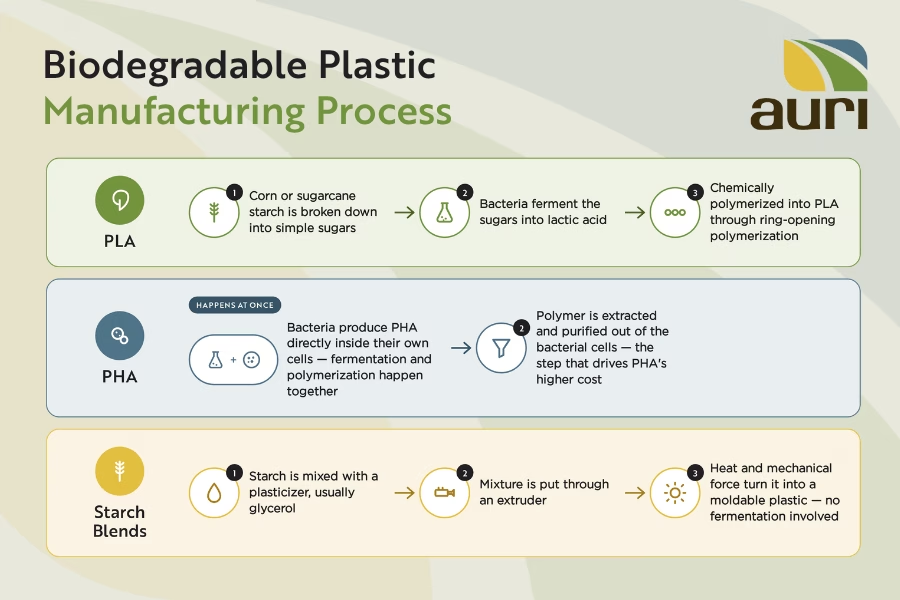
PLA goes through a multi-step conversion process:
- Corn or sugarcane starch is broken down into simple sugars
- Bacteria ferment the sugars into lactic acid
- The lactic acid is then chemically polymerized into PLA through a separate reaction called ring-opening polymerization
PHA skips that separate polymerization step entirely:
- Bacteria produce PHA directly inside their own cells as an energy reserve, so fermentation and polymerization happen simultaneously.
- The manufacturing work shifts downstream instead, to extracting and purifying the polymer out of the bacterial cells, which is a major reason PHA costs more to produce at scale.
Starch-based blends are the most direct process of the three:
- Starch is mixed with a plasticizer, usually glycerol
- It’s then put through an extruder
- Heat and mechanical force break down the starch’s natural crystal structure and turn it into a moldable plastic
- No fermentation step is involved at all
What are the pros and cons of using biodegradable plastics?
Biodegradable plastic isn’t a simple upgrade over conventional plastic. It solves some problems and introduces others, and the tradeoffs matter for anyone deciding whether to use it.
| Pros | Cons |
|---|---|
|
|
Together, these add up to a set of harder underlying questions for any manufacturer weighing a switch: will the material perform? Will it scale? Will the economics and environmental case actually hold up?
How do you evaluate a biodegradable plastic for a specific product?
For an entrepreneur or product developer weighing a switch to biodegradable plastic and choosing between PLA, PHA, and starch-based blends, we recommend matching the material to three practical constraints:
- Disposal environment. If the end product will realistically end up in a landfill rather than an industrial composting facility, it won’t get the conditions needed to break down as designed, and will behave much more like conventional plastic instead. Access to composting infrastructure varies by region, so it’s best to confirm ahead of choosing which material to use.
- Performance requirements. Heat exposure, moisture exposure, and required shelf life can rule out certain materials. A product that needs to hold up in any environment that gets hot or humid has constraints that PLA or starch blends may not meet.
- Cost tolerance. Biodegradable resins cost more than commodity plastics, and the gap depends on material and supplier. Ask for a quote against your specific requirements.
Ultimately, the most suitable material depends on the specific product, the specific market, and the specific supply chain. Working through them against your actual specification and budget, rather than general guidance, is exactly the kind of feasibility work AURI’s Bioindustrial team does before a business commits capital to a new material.
AURI’s Bioindustrial team can help you test feasibility, work through cost and performance tradeoffs, and get a clear read on your options before you commit capital to a new material.
Frequently Asked Questions (FAQs)
How long does it take for a biodegradable plastic to break down?
It depends on the material and the disposal environment. Under industrial composting conditions, many biodegradable plastics break down in a matter of months. In a landfill, where heat and microbial activity are limited, breakdown can take much longer and may not happen at all within a reasonable timeframe.
Is biodegradable plastic the same as compostable plastic?
No. Biodegradable means microorganisms can break the material down eventually, but it doesn’t guarantee a specific timeframe or outcome. Compostable is a narrower, certified claim that the material breaks down into usable compost within a defined period under composting conditions, typically verified against a recognized standard.
In the US, that typically means certification against ASTM D6400, a standard from ASTM International (formerly the American Society for Testing and Materials). In Europe, it means meeting EN 13432, a European Norm covering compostable packaging.
How much does biodegradable plastic cost compared to regular plastic?
Biodegradable resins generally cost more than commodity petroleum-based plastics, largely due to feedstock and production-scale differences. Exact pricing varies significantly by material type, formulation, and supplier, so current quotes are a more reliable guide than general estimates.
Can biodegradable plastics be recycled with regular plastic?
Usually not. Biodegradable plastics like PLA are designed to break down under composting conditions, not to be reprocessed like conventional PET or HDPE. Research on mixed-stream recycling has found that PLA is severely incompatible with PET recycling, meaning even small amounts of PLA mixed into a PET recycling batch can contaminate it. Check with your local recycling program or composting facility for how to handle a specific product.
How is biodegradable plastic made at home or on a small scale?
Producing genuine biodegradable plastic requires fermentation or polymerization equipment that isn’t practical at a hobbyist scale. Small-scale experimenters sometimes work with starch-based bioplastic recipes using ingredients like cornstarch, glycerin, and vinegar, but these produce a different, less durable material than commercially manufactured PLA or PHA.
To run a smaller-scale test for viability, we recommend working with a technical assistance organization like AURI’s Bioindustrial team, which offers pilot-scale processing and feasibility testing that can validate whether a concept holds up before you invest in your own equipment.