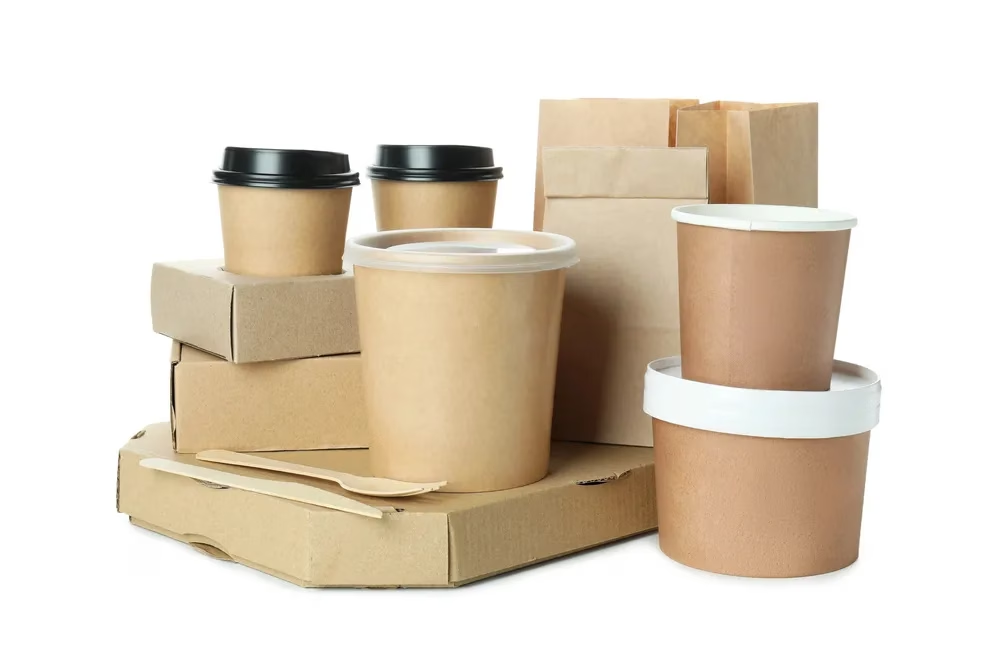
- Containers and packaging made up 28.1 percent of U.S. municipal solid waste in 2018 (more than 82 million tons).
Read full summary ▾
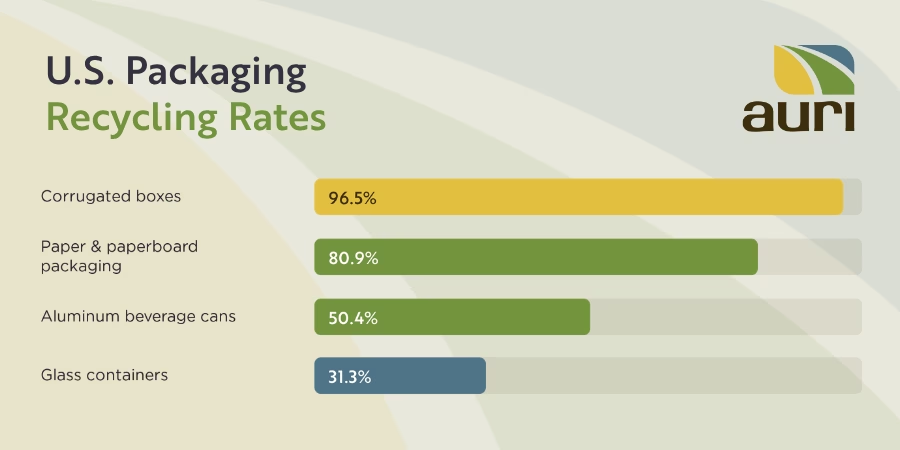
- Recycling rates vary widely by material: corrugated boxes recycle at 96.5 percent, aluminum beverage cans at 50.4 percent, and glass containers at just 31.3 percent.
- Sustainable packaging spans six distinct materials: recycled paper, plant-based fiber, biodegradable plastics, compostable packaging, aluminum, and recycled glass, each with different origins, processes, and trade-offs.
- Choosing the right material comes down to four factors: the product being packaged, whether the packaging is certified for the right composting environment, whether local recycling or composting programs actually accept it, and how the material performs under real conditions.
This article covers what makes a packaging material sustainable, walks through six materials businesses are using today, and lays out the practical factors to weigh before switching. You’ll also see AURI’s research on the gap between how sustainable a package looks to consumers and how sustainable it actually is.
Containers and packaging made up the largest share of U.S. waste in 2018, totaling more than 82 million tons. More recent industry data shows that plastic recycling continues to lag, with the plastic packaging recycling rate sitting at just 13.3 percent. Fortunately, companies today have more sustainable packaging options to consider.
However, determining which options truly deliver on their environmental promises is challenging. Many materials are marketed as sustainable, but their real-world impact depends on much more than the label. This piece takes a closer look at sustainable packaging, discusses some of the most common materials on the market today, and shares lessons from AURI’s food packaging research.
We’ll discuss the following:
- What are sustainable packaging materials?
- Why would a business choose sustainable packaging?
- What are examples of sustainable packaging materials?
- How do you choose the right sustainable packaging material for your product?
- AURI’s applied research on sustainable packaging
- Putting sustainable packaging to the test: AURI’s ground beef packaging research
- Frequently asked questions (FAQs)
AURI’s Bioindustrial team helps entrepreneurs, farmers, and businesses turn early product ideas into commercially viable, sustainable businesses.
What are sustainable packaging materials?
With so much packaging ending up as waste, companies are looking for alternatives that can lessen their environmental footprint. Sustainable packaging materials are designed to do exactly that, reduce negative environmental impacts throughout the product’s lifecycle – from sourcing and production to disposal.
A packaging material earns the label “sustainable” when it meets these standards. The material is:
- Made from renewable or responsibly sourced resources (e.g., corn starch, sugarcane, agricultural fiber).
- Can be recycled, composted, or otherwise kept out of landfills.
- Reduces reliance on traditional fossil-fuel-based plastics.
Of course, sustainability isn’t as simple as checking one box. A material might be technically compostable, but if it requires using a specialized industrial facility that is inaccessible to most businesses, its practical benefits may be limited. That’s why companies are looking beyond the old “plastic versus paper” debate and closely examining how materials are sourced, processed, used, and ultimately disposed of.
Why would a business choose sustainable packaging?
Beyond the environmental case, there are three common business reasons to make the switch: regulatory fees, customer demand, and available funding to help cover the cost of switching.
Regulatory costs are starting to favor sustainable packaging
Minnesota passed the Packaging Waste and Cost Reduction Act in 2024. It directly affects any business selling packaged goods in the state with annual revenue above $2 million, or that sells 1 ton of packaging. Starting in 2029, producers will pay fees to a state-approved recycling and composting program, with the fee rate rising to cover 90 percent of program costs by 2031. Those fees are eco-modulated, meaning businesses that use recyclable, compostable, or post-consumer recycled materials pay less than those that use hard-to-recycle packaging.
Minnesota isn’t the only state doing this. Six other states, California, Colorado, Oregon, Maine, Maryland, and Washington, have passed similar laws, several already collecting fees. Switching to more sustainable packaging is increasingly a way to reduce a cost that’s becoming mandatory rather than just a voluntary upgrade.
Customers are already choosing sustainability
Sustainable packaging also directly shapes buying decisions, though not in isolation from other factors. A 2025 survey of more than 11,000 consumers across 11 countries found that price and quality still matter most to shoppers overall, but recyclability stands out as the single most important sustainability trait among all the packaging attributes tested. For businesses competing on shelf or online, that’s a measurable factor in making a packaging decision.
Funding can help offset the switch
The USDA’s Sustainable Packaging Innovation Lab offers awards of $50,000 to $250,000 for sustainable packaging research, scaling, and commercialization, specifically for businesses exporting fresh produce.
More broadly, Minnesota’s AGRI Value-Added Grant offers up to $150,000 in reimbursement funding for packaging equipment and other processing investments. It isn’t limited to sustainable materials specifically, but a packaging material switch would likely qualify as an eligible project.
What are examples of sustainable packaging materials?
These materials cover most of the sustainable packaging options on the market right now. Each one comes from a different source and breaks down differently, so the right choice depends on what you’re packaging and where it ends up. Recyclability also varies significantly by material, as the numbers below show.
Recycled paper
Recycled paper packaging is made from recovered paper and cardboard rather than virgin wood pulp. Collected paper is pulped (mixed with water into a slurry), cleaned of contaminants such as staples and tape, then reformed into sheets or molded shapes, and dried.
Paper and paperboard packaging had an 80.9 percent recycling rate in 2018, the highest of any packaging material category EPA tracks, with corrugated cardboard specifically reaching 96.5 percent. The trade-off is that paper fibers shorten every time they’re recycled, and after roughly five to seven cycles, they become too short to bond into new paper, so recycled paper always needs some virgin fiber mixed in. It also absorbs moisture, which limits its use for wet or greasy products without an added coating.
Plant-based materials
These are formed directly from plant fiber or agricultural byproducts rather than chemically processed into a plastic. Molded fiber pressed from sugarcane bagasse or wheat straw is the most common example, made by turning crop residue into a pulp slurry and shaping it in vacuum or pressure molds, the same basic process as molded paper packaging, just from a different fiber source.
The advantage over biodegradable plastics: no polymerization step, which generally means simpler manufacturing and materials that break down without needing industrial-only conditions. The trade-off is durability and consistency. Fiber strength varies more with harvest and crop than with an engineered plastic resin, and moisture resistance is limited without a coating.
Also, recycled paper is technically plant-based, so the real distinction here is between virgin agricultural fiber and recovered paper stock.
Biodegradable plastics
This category is defined by chemistry rather than raw material – plastics engineered to break down through microbial action rather than sit intact for centuries.
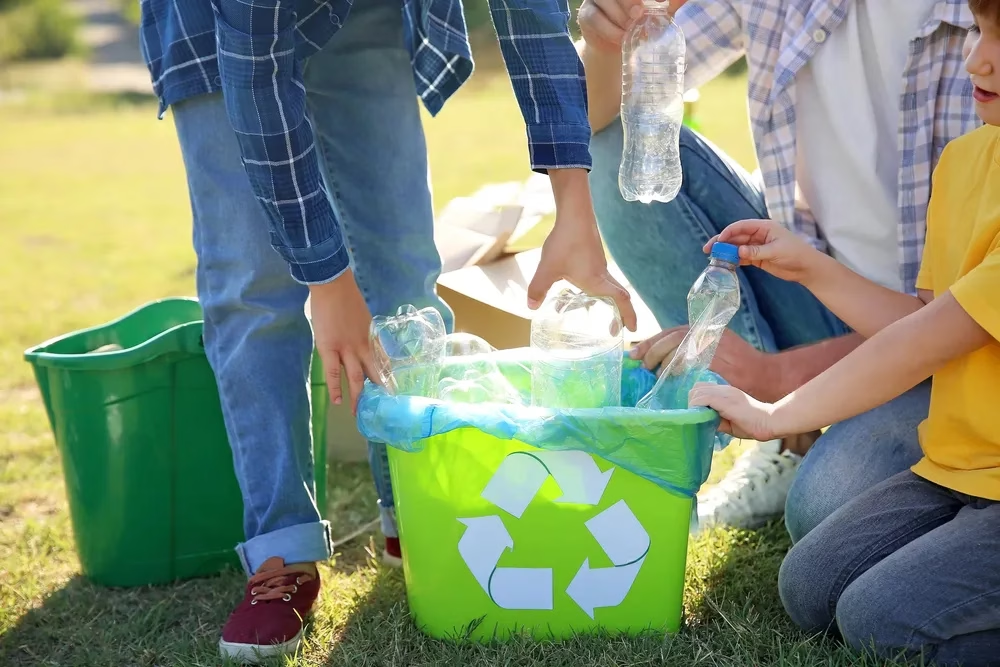
Three types dominate the market:
- PLA is made by fermenting plant sugars (such as corn or sugarcane) into lactic acid, then polymerizing it. It’s both bio-based and biodegradable, but only breaks down under industrial composting conditions.
- PHA is produced through bacterial fermentation of sugars or lipids rather than chemical synthesis. It’s biobased and can biodegrade in soil and marine environments, not just industrial facilities, but it costs more and needs specialized processing equipment that most manufacturers don’t already have.
- PBAT is petroleum-derived, not biobased, but is still certified biodegradable/compostable under industrial conditions. It’s commonly blended with PLA or starch to make flexible films and bags, since PLA alone is too rigid for that use.
The pro across all three is reduced landfill persistence compared to conventional plastic (except PBAT, which doesn’t reduce fossil fuel dependence even though it biodegrades). The downside is that “biodegradable” isn’t independently regulated; a claim only has value when it’s backed by certification.
Recycled glass
Glass packaging is made by melting silica sand, soda ash, and limestone into a molten blend that solidifies into the packaging form. Recycled glass, known as cullet, can replace some or all of that virgin material. Collected glass is sorted by color, cleaned, crushed into cullet, and melted at high temperatures alongside or in place of raw materials.
Because glass is 100 percent recyclable without any loss in quality, it creates a real closed loop, unlike plastic, which degrades in quality with each cycle. Using cullet also cuts furnace energy use by roughly 2-3 percent for every 10 percent of cullet in the mix. The catch is U.S. infrastructure rather than the material itself: the glass container recycling rate was 31.3 percent in 2018, well behind paper, because glass is heavy, breakable, and often not profitable enough for municipal recycling programs to prioritize.
Compostable packaging
Unlike the other types, this isn’t a raw material or chemistry category. It’s a certified end-of-life outcome that several of the materials above can qualify for. In the U.S., the Biodegradable Products Institute (BPI) is the certifying body. BPI’s Commercial certification confirms a product breaks down in an industrial composting facility within a set timeframe. Its newer Commercial & Home certification (launched December 2025) confirms the same for a backyard compost bin.
PLA, PHA, and molded plant fiber can all earn this certification, but PBAT and conventional plastic generally cannot without significant reformulation.
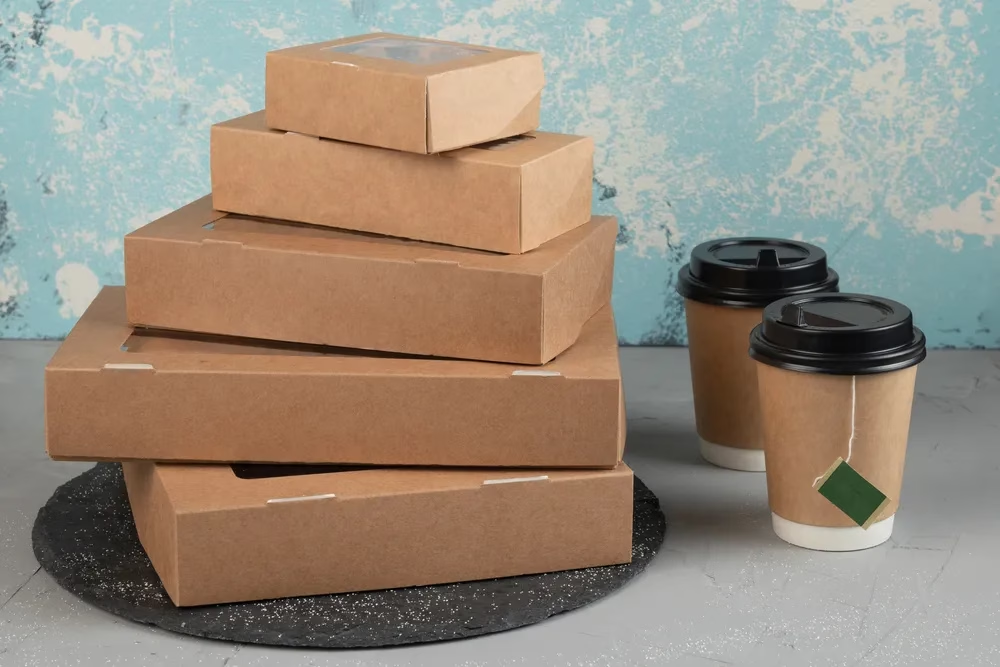
The advantage of “compostable” as a claim over “biodegradable” is that it’s independently tested and regulated, not just asserted. The limitation is the same one that shows up everywhere else in this list: the certification only delivers value if composting infrastructure, industrial or home, actually exists where the product is used.
Aluminum
Aluminum packaging (cans, foil, some rigid containers) starts either from mined bauxite ore, refined and smelted in an energy-intensive process, or from recycled scrap, which just needs to be melted down and reformed.
Recycling makes a big difference here. Recycled aluminum uses about five percent of the energy required to make new aluminum from ore, and it can be recycled indefinitely without losing strength. In 2018, the EPA reported a 50.4 percent recycling rate for aluminum beverage cans, well above glass and close to paper’s overall rate.
How do you choose the right sustainable packaging material for your product?
The most common misstep in choosing sustainable packaging isn’t picking the wrong material. It’s picking a material without checking whether it fits the product, the certification, or the market it’s shipping to. These four steps help you align suitability before you commit.
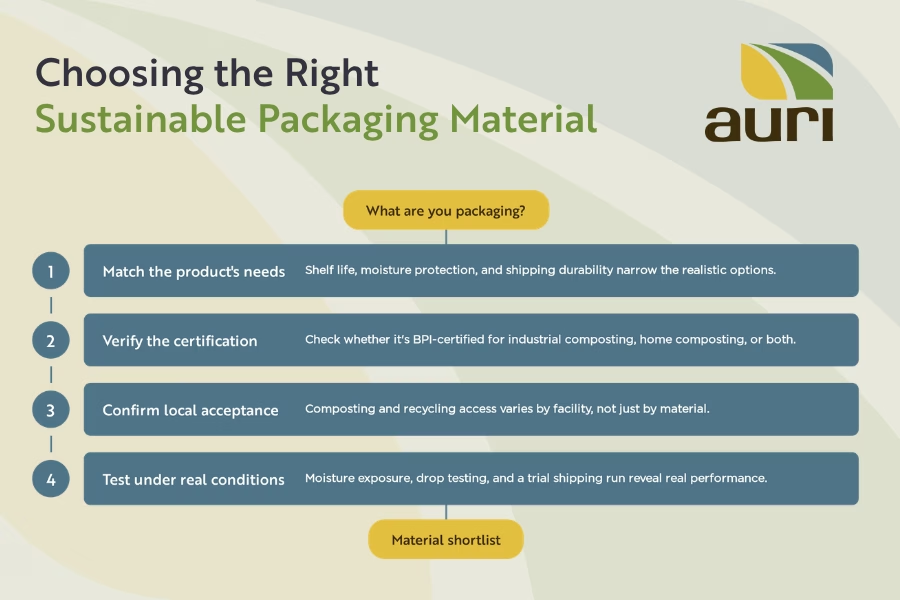
Choose based on what’s being packaged
A fragile or perishable product needs a different performance than a shelf-stable one. Some recommendations:
- PLA suits perishable food, such as fresh meat trays, specifically because of its oxygen-barrier properties.
- Plant-based materials like molded fiber work well for fragile items that require complex, contoured cushioning.
- Products that need an airtight seal, such as canned beverages or liquids, are better served by aluminum or recycled glass, since neither is as porous as paper-based materials.
If your product doesn’t fit any of these cases, start by listing what it actually needs to survive: moisture exposure, temperature swings, drop impact, and shelf time before comparing materials. AURI’s Packaging Guide for Scaling Food Businesses walks through exactly this kind of decision-making for food businesses looking to move beyond simple, store-bought packaging.
Check whether the product is certified for industrial composting, home composting, or both
“Biodegradable” isn’t a regulated term, but a BPI Certification Mark is. BPI offers two distinct certifications: Commercial Only, for industrial composting facilities, and Commercial & Home, which additionally confirms a product breaks down in a backyard compost bin.
The two aren’t interchangeable, and a product certified only for commercial composting won’t necessarily break down in a home compost pile. Getting this wrong means the compostable claim might not hold up for customers without access to industrial composting.
Confirm the material is accepted where your product will be sold
A sustainability claim only matters if your customers can actually act on it. Recycling and composting are run city by city, not nationally, so what one city accepts, the next city over might not. Call or check the website of the recycling or composting program in the areas where you’ll sell your product before you commit to a material. Don’t assume a material is accepted just because it’s technically recyclable somewhere.
Cost ties into this, too. Newer materials like mycelium packaging cost more right now at small production runs. That gap shrinks as more businesses use them and more cities build out composting infrastructure to handle them. So don’t rule out a material just because it’s expensive today. Ask what the pricing looks like at the volume you’d actually order, and whether that’s likely to change.
Request samples and test under real conditions
Ask suppliers for physical samples before committing to a material. Once you have samples, there are three practical checks:
- Moisture. Spray or soak the packaged product as per ASTM D951 to test water resistance, then check whether the package weakens, leaks, or loses its shape. This matters most for fiber-based and plant-based materials, which absorb moisture more than plastic, aluminum, or glass do.
- Drops and compression. Two things matter here: can it survive a drop, and can it survive being stacked? You can get a rough sense yourself, drop a packed sample a few times from counter height, then stack weight on it the way it’d sit in a warehouse.
- A trial shipping run. Before switching your full order, ship a small batch through your actual carrier and under real conditions: same distance, same handling, same weather if relevant.
AURI’s applied research on sustainable packaging
AURI’s Bioindustrial team pairs applied research with business development support for Minnesota food and agricultural businesses working on biobased products. The two paths work closely together – and reflect AURI’s holistic approach, which integrates technical findings with market and business realities rather than treating them as separate steps.
The research below is a direct example of that approach applied to a real packaging question for the beef industry.
Talk to the Bioindustrial teamPutting sustainable packaging to the test: AURI’s ground beef packaging research
AURI conducted applied research focused on making fresh meat packaging more sustainable, evaluating how packaging choices affect both environmental impact and food waste.
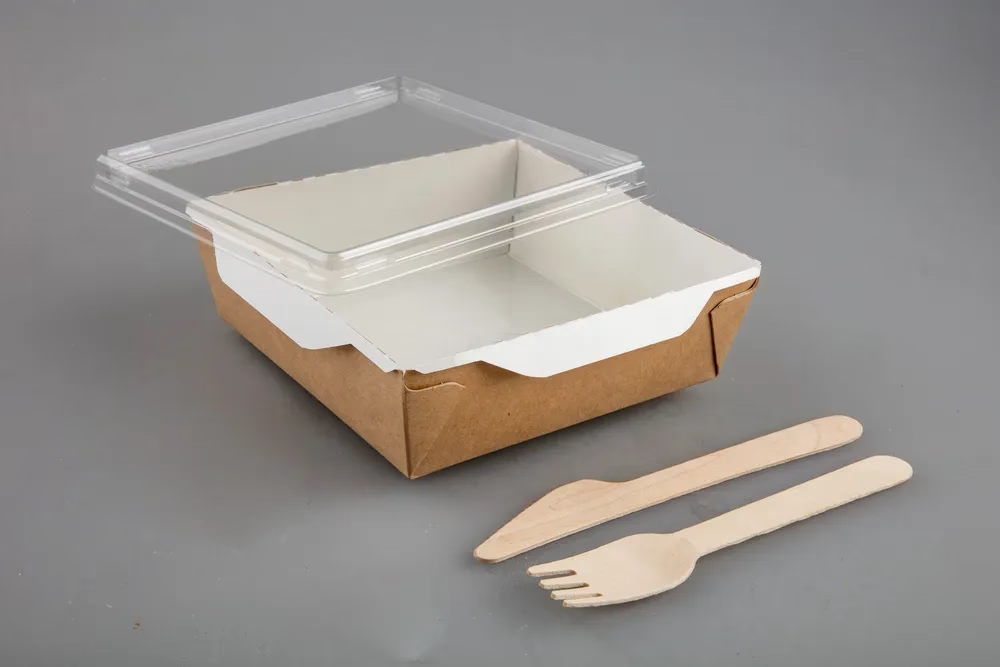
Phase 1: Testing consumer perception
AURI tested consumer reactions to six different sustainable packaging concepts for ground beef. Every concept tested was perceived by consumers as more sustainable than the current package, even though life cycle analysis showed that wasn’t actually true for four of the six concepts. The research also found that package color and the presence of a freshness indicator positively influenced how sustainable a package appeared to shoppers, and how well it seemed to reduce waste.
Phase 2: Reducing food waste through packaging
A follow-up phase built on those results, identifying more sustainable packaging options that help prevent ground beef food waste and examining how those findings can support clearer sustainability communication to consumers.
The project didn’t stop at identifying what worked. Commissioned by the Minnesota Beef Council, it produced a roadmap with 10 follow-up research projects, defining next steps to turn these findings into packaging that actually reduces food waste at retail.
What this means for your own packaging design
Color, labeling, and design details that read as sustainable aren’t just cosmetic. In a 2025 survey of over 2,000 U.S. consumers, 54 percent said they’d deliberately chosen a product with sustainable packaging in the past six months, and 39 percent had switched brands over it.
AURI’s own research found the same effect in practice. A kraft-brown color scheme – natural, unbleached brown paper made through the kraft pulping process (the same process behind most brown paper bags and shipping paper) – and a freshness indicator both shifted how sustainable a beef package appeared to consumers. Customers read those signals as a promise. A sustainable design only goes so far if the materials and processes behind it don’t deliver, and making sure they do is what turns a promise into meaningful environmental impact.
AURI’s Bioindustrial team helps entrepreneurs, farmers, cooperatives, and businesses turn early-stage ideas into competitive products and commercial ventures built to last. If you’re developing a biobased, biogas, or coproduct component or process, we are here to support your dream becoming reality!
Talk to the Bioindustrial TeamFrequently asked questions
What is the most sustainable packaging material?
There isn’t one material that outperforms every other in every situation. The right choice depends on what’s being packaged, how it will be shipped and stored, and whether local recycling or composting infrastructure can actually process the material at the end of life.
Is biodegradable packaging the same as compostable packaging?
No. Biodegradable means a material will eventually break down through natural processes, but that can take a long time and may leave behind fragments. Compostable means it breaks down into usable soil within a defined timeframe under specific conditions, and often requires certification to back up the claim.
How do businesses know if a packaging material is recyclable?
Check whether the material is accepted by recycling programs in the markets where the product will actually be sold and disposed of, not just whether it’s technically recyclable somewhere. A material can be labeled recyclable and still end up in a landfill if local infrastructure doesn’t process it.
Does sustainable packaging cost more than conventional packaging?
Cost varies by material and by volume, and there isn’t a single verified figure that applies across materials and industries. Newer materials often cost more at a small scale and become more competitive as production volume increases, so cost comparisons are most useful when run against a specific product and order size.
Can agricultural byproducts be used to make packaging materials?
Yes. Crop residues like sugarcane bagasse and wheat straw are already used as fiber sources for molded packaging, and mycelium grown on agricultural waste is being developed into molded, compostable packaging shapes.