- Anaerobic digestion breaks down organic material like manure and food waste without oxygen, producing biogas and a nutrient-rich byproduct called digestate.
Read full summary ▾
- More than 400 anaerobic digesters are operating on U.S. livestock farms as of 2024, with over 70 more under construction.
- Biogas recovery is technically feasible at more than 8,000 large U.S. dairy and hog operations, most of which don’t yet have a digester in place.
- Minnesota’s agricultural producers have the potential to meet 43% of the state’s natural gas demand with biogas, yet fewer than 20 on-farm digesters were operating statewide as of 2025.
- AURI provides Anaerobic Digestion testing services that support Minnesota producers before committing to a full-scale project by providing services such as feedstock composition, methane potential, and demonstration testing from bench to pilot scale.
This piece walks through how anaerobic digestion works step by step, what materials can feed a digester, and what it produces. It also covers the practical benefits for farms and rural economies, and closes with how AURI helps Minnesota producers and businesses explore a project of their own.
Anaerobic digestion turns waste that would otherwise sit in a lagoon or a landfill into usable energy and fertilizer. Farmers, food processors, and municipalities use it every day to handle manure, food scraps, and other organic materials while producing renewable natural gas. The process itself isn’t new. What’s changed is how many people are paying attention to it, as interest in on-farm energy production and waste management continues to grow across the Midwest.
We’ll discuss the following:
- What is anaerobic digestion?
- How does the anaerobic digestion process work?
- What feedstocks go into an anaerobic digester?
- What comes out of an anaerobic digester?
- What are the benefits of anaerobic digestion?
- Where is anaerobic digestion used today?
- Frequently Asked Questions (FAQs)
Thinking about anaerobic digestion for your operation? AURI’s Bioindustrial team tests feedstocks, assesses biomethane potential, and runs pilot-scale digestion trials, backed by feasibility and techno-economic analysis. Start a conversation with our team.
What is anaerobic digestion?
Anaerobic digestion is the process by which microorganisms break down organic material without oxygen, producing biogas (a renewable gas composed primarily of methane) and digestate (the material left over after digestion is complete). It happens inside a sealed digester, where bacteria feed on materials like manure, food waste, or crop residue in an oxygen-free environment.
The absence of oxygen is what makes this process different from composting. Composting relies on aerobic bacteria that need oxygen to break material down, while anaerobic digestion works the opposite way – it uses bacteria adapted to environments without oxygen. That biological difference is also why anaerobic digestion produces methane-rich biogas, while composting primarily produces heat and carbon dioxide.
How does the anaerobic digestion process work?
Anaerobic digestion proceeds through four biological stages, each carried out by a distinct set of microorganisms. Every stage breaks the material down a little further, ending in methane production.
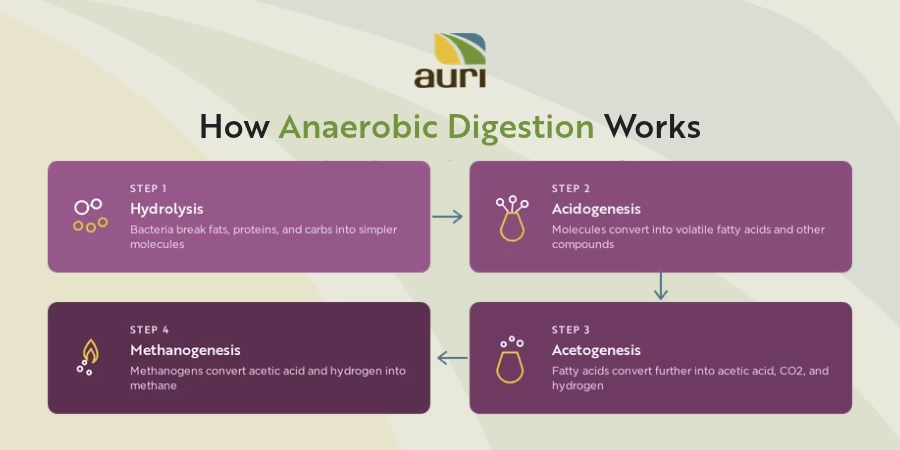
- Hydrolysis. Bacteria break down complex organic matter, including fats, proteins, and carbohydrates, into simpler molecules such as fatty acids, amino acids, and sugars.
- Acidogenesis. Those simpler molecules convert into volatile fatty acids.
- Acetogenesis. The fatty acids convert further into acetic acid, releasing more carbon dioxide and hydrogen along the way.
- Methanogenesis. Methanogens, a specialized group of microorganisms, convert acetic acid as well as hydrogen and carbon dioxide into methane, the primary component of biogas.
Temperature, pH, and how consistently the digester is fed all affect how efficiently this process runs. Most digesters operate in a mesophilic range, generally 95 to 104 degrees Fahrenheit, though some run hotter in a thermophilic range for faster processing.
What feedstocks go into an anaerobic digester?
Anaerobic digesters process organic material, most commonly livestock manure, food processing waste, wastewater biosolids, and crop residues.
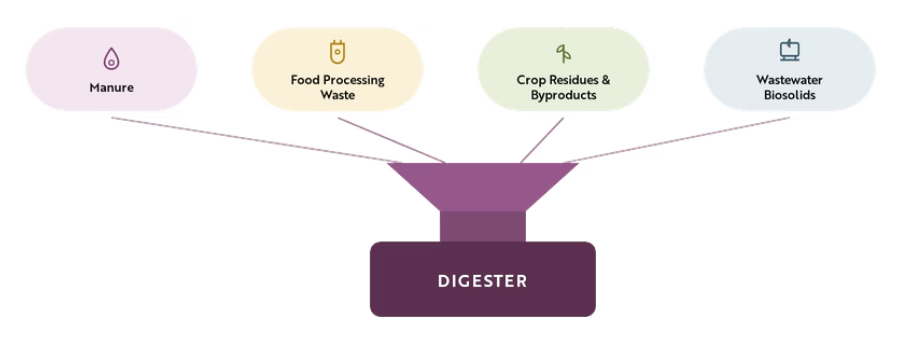
Manure
Manure is the most common feedstock on farms, particularly from dairy and hog operations, where liquid manure is already collected. Dairy operations account for the large majority of U.S. farm digesters, followed by hog, beef, and poultry operations. The type of digester used typically depends on the manure management system already in place and how much liquid the manure contains.
Food processing waste
Food waste from restaurants, grocery stores, and food processors is another major source. When blended with manure, food waste can increase digester efficiency, which is why many on-farm digesters accept it as a supplemental feedstock rather than relying on manure alone.
Crop residues and other byproducts
Crop residues and other agricultural byproducts round out the mix on many farms, depending on what’s locally available. Energy crops and fats, oils, and grease from restaurant grease traps are two common examples, both typically collected as co-digestion feedstocks rather than used as primary feedstocks on their own.
Wastewater biosolids
Municipal wastewater treatment plants, also called water resource recovery facilities, operate the largest number of anaerobic digesters. These facilities primarily process wastewater solids, also known as sewage sludge, though some also accept food waste or other organic material to boost biogas output.
Codigestion
Many operations blend multiple feedstocks together, a practice called codigestion, to improve gas output and process stability. Pairing a nitrogen-rich feedstock, such as manure, with a carbon-rich one, such as food waste or crop residue, often works better than either alone, since the blend is easier for microorganisms to break down evenly. The right combination depends on the operation, the digester design, and consistently available local materials.
What comes out of an anaerobic digester?
Anaerobic digestion produces two main outputs: biogas and digestate.
Biogas
Biogas is composed primarily of methane, typically 45 to 75 percent methane, depending on feedstock and digester type, along with carbon dioxide, hydrogen sulfide, water vapor, and trace gases. In its raw form, biogas can be burned directly for heat or used to generate electricity, which is the simpler path many on-farm systems take.
Getting biogas into a vehicle’s fuel tank or the natural gas pipeline takes an extra step. Raw biogas must be processed to meet the higher purity pipeline injection requires. Facilities close that gap by scrubbing out carbon dioxide, water vapor, and trace gases, producing renewable natural gas that meets pipeline standards or can be used as compressed vehicle fuel.
Digestate
Digestate is the material left over after digestion. Digestion converts much of the nitrogen into more plant-available forms and reduces pathogen levels compared with raw manure, though the degree of reduction depends on operating temperature and retention time.
Most farms mechanically separate digestate rather than using it as a single mixed product. Separation concentrates phosphorus largely in the solid fraction, while nitrogen remains mostly in the liquid, giving farms the flexibility to manage the two nutrients independently. The liquid fraction is typically spread on fields as fertilizer, while the solids can be used as livestock bedding or sold as compost, giving farms a second revenue stream beyond the biogas itself.
What are the benefits of anaerobic digestion?
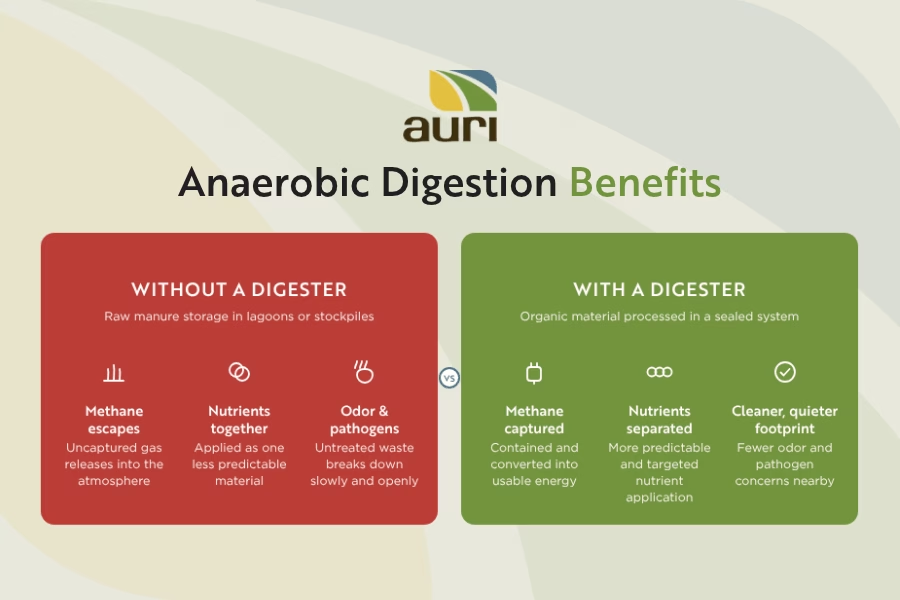
Anaerobic digestion offers plenty of practical benefits: it cuts methane emissions, produces renewable energy, creates a usable fertilizer byproduct, and reduces odor and pathogens compared to untreated waste.
Reduced methane emissions
Manure stored in lagoons or stockpiles decomposes without oxygen, generating methane that escapes into the atmosphere. Anaerobic digesters capture methane before it escapes and use it for energy instead. This is important because methane is a far more potent greenhouse gas than carbon dioxide over a short timeframe. Keeping methane contained yields an outsized climate benefit relative to the volume captured.
Better nutrient management
Digestion doesn’t remove nutrients, but it makes them easier to manage. Nitrogen converts into more plant-available forms, and separating digestate concentrates phosphorus in the solids while nitrogen stays in the liquid. That lets you apply each nutrient where it’s needed instead of spreading a single mixed material and taking whatever ratio it comes with.
Digestate is also more consistent than raw manure, so it’s easier to test and plan around. With the right timing and application rates, that predictability helps keep nutrients in the field and out of nearby water.
Revenue and cost savings
Digesters can create more than one new income stream on a farm. Beyond the direct sale of electricity or renewable natural gas, many operations collect tipping fees for accepting outside feedstocks, such as food waste. Some pursue additional financing and revenue planning support to improve a project’s return before construction begins. Digestate itself can also be sold as fertilizer or bedding, adding a second product line beyond the biogas. Whether those revenue streams materialize often depends less on the digester itself than on pipeline access, interconnection agreements, and offtake contracts, which is why early feasibility work matters as much as the equipment decision.
Reduced odor and pathogens
Anaerobic digesters are built specifically to manage organic waste more thoroughly than open storage. Depending on operating temperature and retention time, they minimize odors and reduce pathogens compared to untreated manure or food waste. This reduction thereby decreases the number of complaints and regulatory pressure associated with manure odor, while improving conditions for farm workers and neighboring communities.
Where is anaerobic digestion used today?
Anaerobic digestion is used on livestock farms, at food processing facilities, and in municipal wastewater treatment across the country. As of 2024, more than 400 digesters are operating on U.S. livestock farms, with over 70 more projects in the construction phase.
Growth potential remains substantial. The EPA’s AgSTAR program estimates biogas recovery is technically feasible at more than 8,000 large U.S. dairy and hog operations, most of which don’t yet have a digester in place. In Minnesota, that opportunity is largely untapped, with the state’s agricultural producers having the potential to meet 43% of state gas demand with biogas. Yet fewer than 20 on-farm digesters were operating statewide as of 2025.
How can Minnesota producers and businesses explore anaerobic digestion?
AURI operates an applied biology laboratory in support of the biogas industry at its Bioindustrial Innovation Center in Waseca. With small, bench, and pilot-scale anaerobic digestion capabilities, producers and developers have a place to test feedstocks and digestion performance before committing to a full-scale project. Before a project ever reaches the construction phase, this early testing and analysis can tell you a lot about its chances of success, from how the feedstocks perform to whether the economics work. You can learn more about the biogas opportunity for Minnesota farmers by checking out our on-farm business guide.
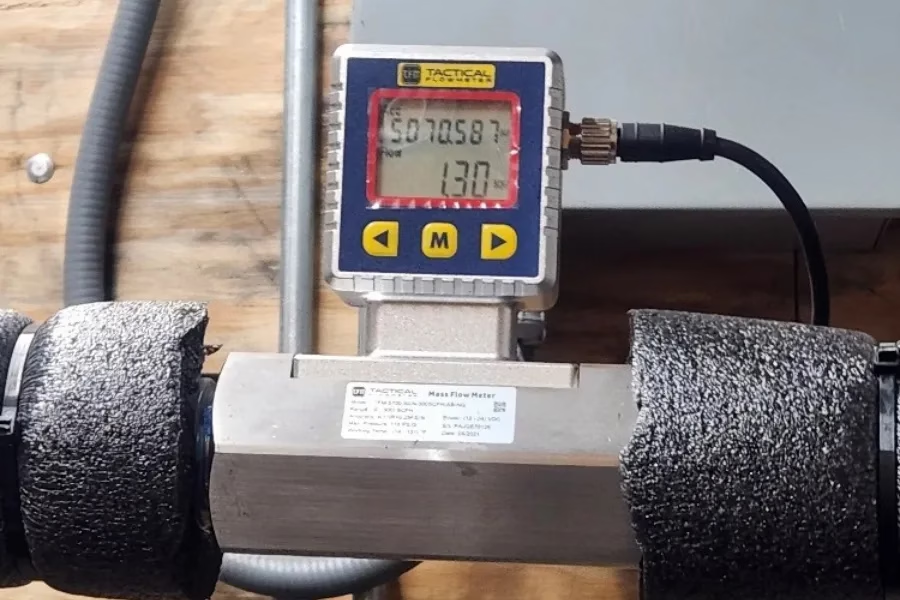
AURI’s Bioindustrial team helps move projects forward with pilot-scale digestion testing, feedstock characterization, and biomethane potential assessment, plus guidance on scale-up, feasibility, and techno-economic analysis. If you’re in the early stages of exploring a project or need the Anaerobic Digestion Pilot Plant data to answer a specific design question, this applied testing can help you make informed decisions before construction – and potentially save time and money along the way.
AURI’s Bioindustrial team can help you work through feasibility, costs, and what to expect before you invest a dollar in equipment. Get an expert, unbiased answer for your operation!
Explore AURI’s Bioindustrial ServicesFrequently Asked Questions (FAQs)
Anaerobic digestion breaks down organic material without oxygen, producing biogas as a byproduct. Composting uses oxygen-dependent bacteria and produces mostly heat and carbon dioxide, with no significant gas capture.
It depends on the digester design and the feedstock. There are many different designs and an endless list of potential feedstocks. Retention time, however, typically ranges from 17 to 45 days, with complete-mix and plug-flow systems on the shorter end and covered lagoons on the longer end. Upflow anaerobic sludge blanket (UASB) reactors can take as little as a few days to treat very low solids high-strength waste that may come from soft drink manufacturing.
Not exactly. Raw biogas contains methane along with carbon dioxide and trace gases, while natural gas is almost entirely methane. Biogas can be upgraded to renewable natural gas that meets the same quality standards as conventional natural gas.
Digestate is most commonly used as a fertilizer because it retains nitrogen and phosphorus from the original feedstock. It can also be used as livestock bedding in some operations.
Costs vary widely with scale, feedstock, and system design. EPA’s AgSTAR program has put the capital cost of an on-farm digester at roughly $400,000 to $5 million, with a typical system near $1.2 million — though these figures predate the recent shift toward larger projects built for renewable natural gas rather than on-farm electricity.
More important than the sticker price is that digester economics rarely work on gas value alone. Recent analysis found that construction costs significantly exceed the value of the gas produced, making projects viable mainly when they also generate environmental credits.
That’s why feasibility and cost assessment should come before committing to a specific design. AURI’s on-farm biogas guide is a good starting point for Minnesota farmers exploring whether anaerobic digestion fits their operation.