- Renewable natural gas (RNG) is biogas upgraded to a high methane content, typically 90% or more, and 96–98% when injected into pipelines, making it interchangeable with conventional natural gas.
Read full summary ▾
- It comes from four most common sources: municipal landfills, livestock manure, wastewater treatment plants, and food waste.
- It has four main, most common end uses: vehicle fuel, pipeline injection, electricity generation, and thermal applications like heating.
- RNG producers can generate revenue in four ways: selling the gas, environmental attribute credits, tipping fees, and digestate sales.
- Minnesota’s feedstock base includes about 600,000 dairy cows and 9.4 million hogs as of early 2026, well-positioning the state’s agriculture sector for renewable natural gas projects.
This article walks through how renewable natural gas is made, from raw biogas to pipeline-ready fuel, and how it’s used once upgraded. It also covers how projects generate revenue and what Minnesota’s agricultural base means for farmers and other project developers weighing whether renewable natural gas fits their operation.
Renewable natural gas can convert organic waste into a useful energy resource and a potential revenue stream. For Minnesota farmers, food processors, and energy developers, understanding how RNG is made and where it can be used is a helpful first step in deciding if it’s right for an operation. This article covers the basics of RNG production, its main uses, and the market factors that affect its value.
We’ll go over the following:
- What is renewable natural gas?
- How is renewable natural gas made?
- What’s the difference between biogas and renewable natural gas?
- How is renewable natural gas used?
- How does renewable natural gas generate revenue?
- The opportunity for Minnesota agriculture
- Frequently asked questions (FAQs)
AURI’s applied testing and pilot-scale capabilities help producers and developers evaluate renewable natural gas projects before they invest.
See AURI’s Biogas ServicesWhat is renewable natural gas?
Renewable natural gas is biogas that’s been processed to pipeline-quality purity, making it fully interchangeable with conventional natural gas. It’s also called biomethane. Unlike raw biogas, which can only be used near where it’s produced, renewable natural gas can be transported through existing natural gas pipelines and power the same appliances and vehicles that run on conventional natural gas.
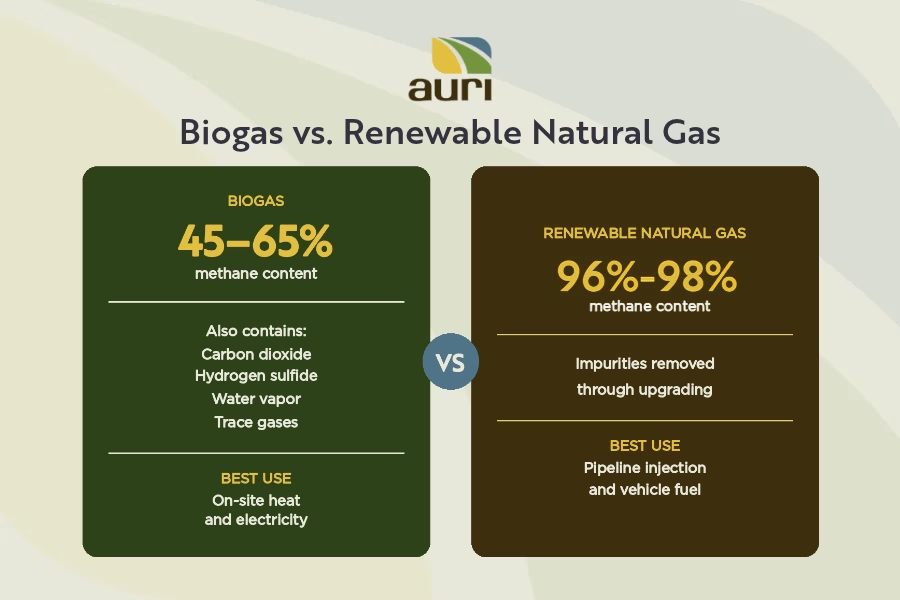
The difference between biogas and renewable natural gas comes down to methane content. Raw biogas typically runs 45 to 65 percent methane. Once it’s treated to remove moisture and impurities, that number climbs to 90 percent or higher, putting it on par with conventional natural gas.
How is renewable natural gas made?
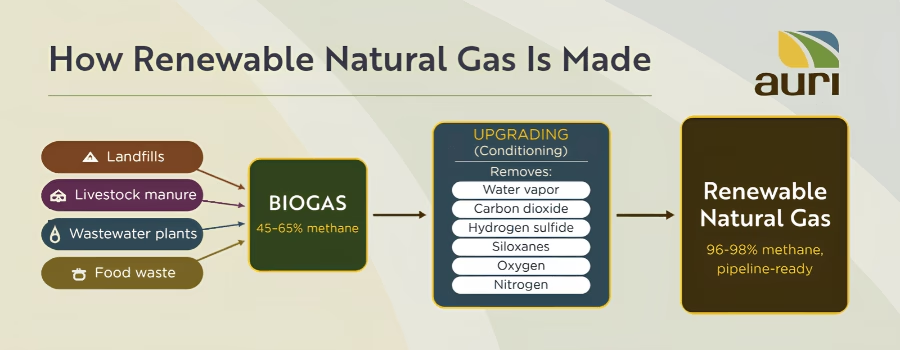
Production happens in two stages: creating biogas, then upgrading it into pipeline-quality fuel. This is what the process looks like:
Step 1: The source
Most renewable natural gas starts with one of four sources: municipal landfills, livestock manure, wastewater treatment plants, and food waste. Each produces biogas through the same basic decomposition process, just in different settings.
- Landfills capture decomposition gas through collection wells.
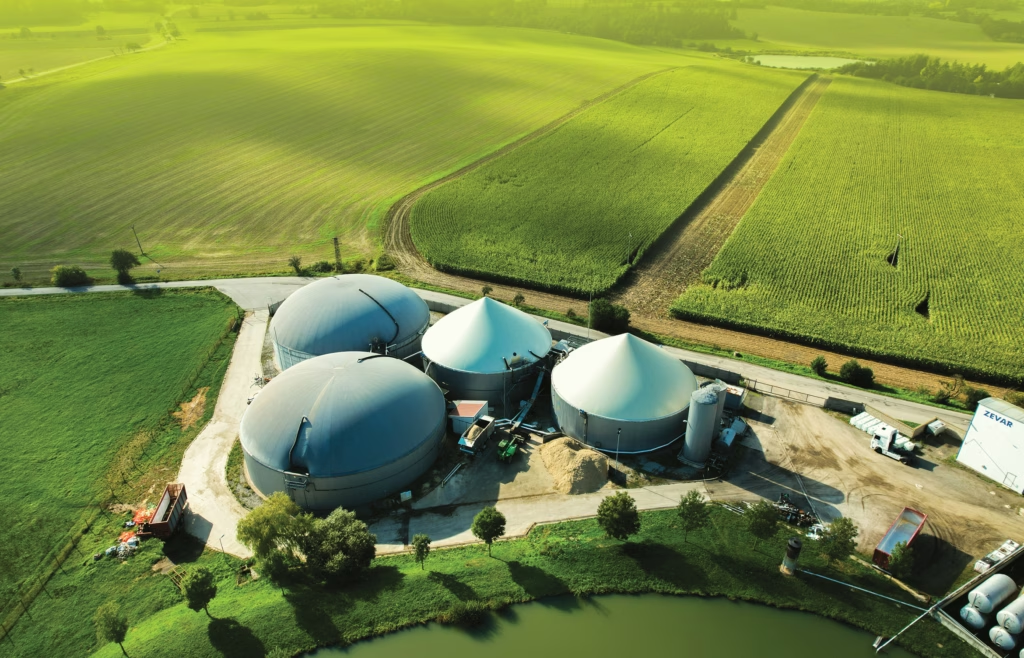
- Livestock operations use manure-fed anaerobic digesters, often built directly on the farm.
- Wastewater treatment plants digest solids removed during treatment.
- Food processors and commercial kitchens generate organic waste that can also feed a digester.
Step 2: Creating biogas
Biogas forms when organic material breaks down without oxygen – a process called anaerobic digestion.
- Organic material is collected and fed into a digester or, at landfills, left in place.
- Microorganisms break the material down in an oxygen-free environment.
- As the material decomposes, it releases a gas that’s roughly 45 to 65 percent methane, along with carbon dioxide and trace gases.
- This raw output is biogas. It can be used on-site for heat or electricity, or sent on for further processing.
Step 3: Upgrading biogas into renewable natural gas
Upgrading, sometimes called conditioning, turns raw biogas into pipeline-quality fuel.
- Raw biogas is passed through upgrading equipment that targets impurities.
- Water vapor is removed from the gas stream.
- Carbon dioxide and hydrogen sulfide are stripped out.
- The result is a gas with a much higher methane concentration, comparable to conventional natural gas.
- Once upgraded, the gas is ready for various purposes.
What’s the difference between biogas and renewable natural gas?
Biogas is the raw gas produced by decomposing organic matter. Renewable natural gas is what you get after the biogas is cleaned up to pipeline-quality standards.
Composition and usability
- Biogas is roughly 45 to 65 percent methane, along with carbon dioxide, hydrogen sulfide, water vapor, and trace gases.
- At that composition, biogas can generate electricity or heat, but it isn’t pure enough for natural gas pipelines or vehicles built for conventional natural gas.
- Renewable natural gas clears that bar, with a methane content high enough to be interchangeable with the conventional natural gas already flowing through utility pipelines.
Which path fits your project?
- Using raw biogas on site, such as generating electricity or heat for farm buildings, is one investment path.
- The alternative is upgrading to pipeline-quality renewable natural gas for sale, which requires additional capital for equipment upgrades and time spent meeting a utility’s purity and interconnection standards.
Not sure which path is right for your project? AURI’s monthly newsletter shares Minnesota biogas developments and real project examples, so you can see how similar operations are approaching this choice.
How is renewable natural gas used?
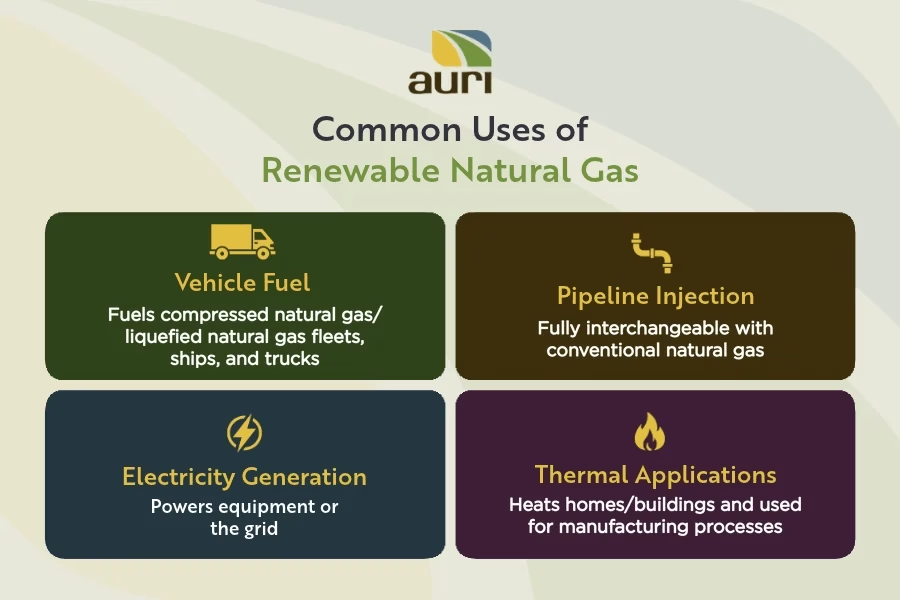
Renewable natural gas has four main end uses: vehicle fuel, pipeline injection, electricity generation, and thermal applications like heating. Since it’s chemically interchangeable with conventional natural gas, it works in existing natural gas equipment.
Vehicle fuel
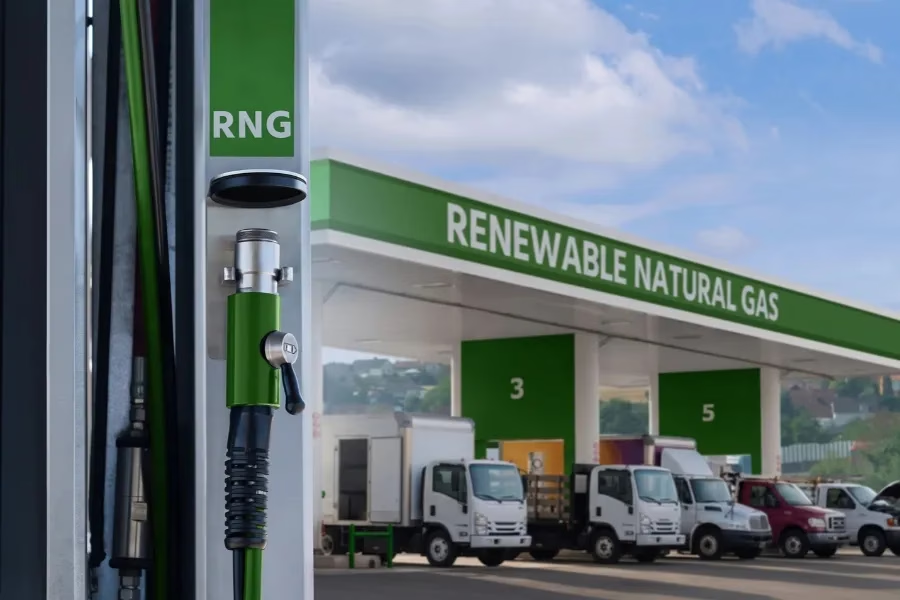
Renewable natural gas can fuel vehicles as compressed natural gas (CNG) or liquefied natural gas (LNG), just as conventional natural gas does. It qualifies as an advanced biofuel, and in most cases a cellulosic biofuel, under the federal Renewable Fuel Standard, which gives RNG producers a financial incentive to supply it as vehicle fuel and helps expand its availability to fleets.
It’s most commonly used by fleets that already run on natural gas, such as waste collection trucks, transit buses, and long-haul trucks.
A few examples already in operation:
- A Chicago urban farm project uses food waste digestion to fuel vehicle fleets
- A California facility produces enough gas to fuel a fleet of 900 vehicles
- A Colorado wastewater treatment plant fuels trucks with RNG made from its own treatment process
Pipeline injection
Once upgraded to pipeline-quality standards, renewable natural gas can be injected directly into existing natural gas transmission or distribution pipelines, blending with the conventional supply already flowing through them.
The utility or pipeline operator sets the gas quality and interconnection requirements and takes the gas that has to meet a strict purity bar first. The project developer usually builds and pays for the interconnection. RNG injected into a pipeline typically has a methane content between 96 and 98 percent, higher than the 90 percent minimum required to qualify as renewable natural gas. That purity is what allows it to move through existing pipeline infrastructure without major changes on the utility’s end.
Electricity generation
Biogas can generate electricity for on-site use or for sale to the local grid, usually without first being upgraded to renewable natural gas.
On a farm, a digester system can power lighting, cooling, and equipment, reducing the amount of electricity the operation buys from the grid. Some projects go further and provide energy to the local grid, helping utilities meet demand with a domestic, renewable supply. Many systems also use combined heat and power (CHP), capturing the engine’s waste heat to warm the digester or farm buildings. Upgraded renewable natural gas can also be used to generate electricity, but it’s more often sold as pipeline gas or vehicle fuel.
Thermal applications
Renewable natural gas can directly substitute for conventional natural gas in heating and industrial process applications, since it has the same energy content once upgraded.
On a farm, that might mean heating barns or warming on-site greenhouses, fed by biogas or upgraded gas produced on-site. At a larger scale, thermal applications extend to industrial boilers and process heat, anywhere a facility currently burns natural gas for heat.
How does renewable natural gas generate revenue?
Renewable natural gas producers generate revenue by selling the gas itself, receiving environmental attribute credits, charging tipping fees, and selling digestate.
- Selling the gas. Energy producers sell renewable natural gas the same way they’d sell conventional natural gas, either through a dedicated pipeline or by injecting it into a utility’s distribution system.
- Environmental attribute credits. When used as vehicle fuel, renewable natural gas qualifies as an advanced biofuel under the federal Renewable Fuel Standard, generating credits that add value beyond the fuel’s base price. Depending on the project, programs like California’s Low Carbon Fuel Standard can add further value.
- Tipping fees. Digester projects that accept organic waste (such as food scraps) can charge a fee for accepting that material.
- Digestate sales. The material left over after digestion, called digestate, can offset fertilizer and bedding costs or be sold, adding another revenue stream to the same project.
The opportunity for Minnesota agriculture
Minnesota has the feedstock base to support renewable natural gas projects. The state was home to about 600,000 dairy cows and 9.4 million hogs as of early 2026, alongside a network of food processors generating byproduct streams that digesters can use. Additionally, farm-based biogas projects have grown nationally from just 2 in 2005 to 135 in 2023. Nationally, about 470 anaerobic digester systems were operating at commercial livestock farms as of 2023.
Methane capture also carries environmental weight. Methane has a global warming potential 28 times greater over 100 years than carbon dioxide, so projects that capture and use it deliver a measurable benefit alongside the economic one.
Overall, Minnesota has the feedstock supply and a track record to draw on, with methane capture adding an environmental return on top of the economic one.
Want to see if renewable natural gas fits your operation? AURI’s biogas team can help you evaluate feedstock availability, project economics, and the right product pathway before you invest.
Talk to AURI’s Biogas TeamFrequently asked questions (FAQs)
Chemically, yes – at least once it’s upgraded. Renewable natural gas achieves the same 90-plus percent methane content as conventional natural gas, which is why it can flow through the same pipelines and power the same equipment.
It’s made from organic waste streams, like manure, food scraps, and landfill material, that are continuously generated rather than extracted from the ground. That’s what qualifies it as renewable rather than a fossil fuel.
Biogas is the raw, unprocessed gas. Renewable natural gas is biogas that’s been upgraded to remove impurities and raise its methane content to pipeline quality.
Livestock operations, particularly dairy and hog farms, are well-suited to on-site anaerobic digestion. Whether a specific farm is a good candidate depends on feedstock volume, infrastructure access, and project economics.
Anaerobic digestion leaves behind a byproduct called digestate, the material that didn’t convert into biogas during the process. It’s commonly sold as fertilizer or animal bedding, giving digester projects a use for the material and, often, an additional source of revenue.