“We have unparalleled agricultural champions, a deep bench of collaborators and visionaries, and the know-how to both set and execute our strategic direction.”
Another growing season will soon be in the rearview mirror. Undoubtedly, this season brought challenges, but each season also brings learnings that can be applied to 2027 and beyond. Taking time to reflect and look ahead can be difficult amid the fall season’s rush, but it is also a critical step in re-evaluating an organization’s strategic direction.
At AURI, we successfully executed upon our strategic priorities over the past year, began exploring new ones, advanced our bread-and-butter programs, and continued investing in forward-looking opportunities that we believe will benefit Minnesota agriculture.
Our last 3-year strategic plan wrapped up on June 30 and set a strong base for future opportunities. The plan established a focus on our people and culture; set priorities based on our execution strengths and expected growth rates across value-added agriculture sectors; improved measurement of our impacts across programs; created multiple new brand advancements; strengthened engagement with several new entities; and enabled key organizational changes to increase future performance. As I write this, we are finalizing the strategic priorities that will guide us through 2030 and position us to deliver even greater value to Minnesota agriculture in the years ahead.
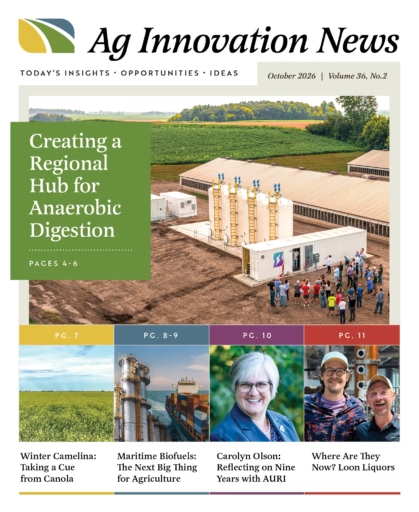
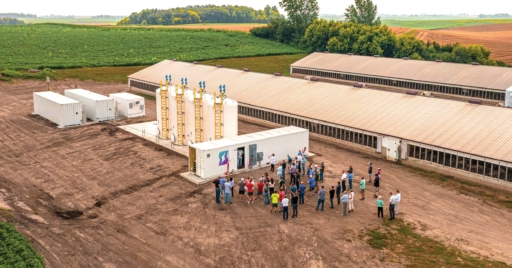
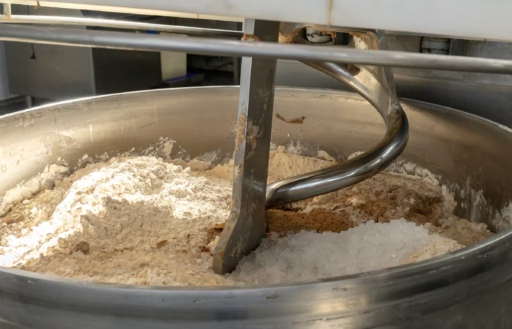
Over the past year, we’ve continued our collaboration with soybean growers. Together, we’ve explored new uses for soybean meal and oil, such as biobased fertilizer applications and asphalt rejuvenates, through both product development and increased market awareness of existing commercial products. Our food scientists continue to support many food businesses across the state in getting products into retail or food service channels, such as school lunch programs. These efforts help transform the crops we raise locally into ingredients for consumable goods. Our work in the biogas and anaerobic digestion area continues to see new on-the-ground developments. We continue to find ways to use agricultural waste streams and valorize them into various products, such as biogas, a renewable energy product, and digestate for fertilizer or livestock bedding applications.
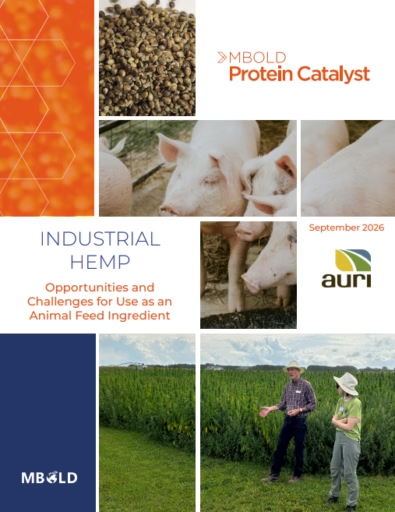
We’ve partnered with the MBOLD coalition to develop feed ingredient markets for winter camelina meal and industrial hemp seed meal. Both crops show promise for traditional protein markets, renewable energy applications, and, in the case of industrial hemp, fiber products. These market opportunities, combined with environmental benefits, make a strong case for continuing applied research to demonstrate how winter camelina and industrial hemp can complement Minnesota’s agricultural production.
I am excited about the future of innovation for Minnesota agriculture and expanding upon our past successes. There will be obstacles along the way. But we have unparalleled agricultural champions, a deep bench of collaborators and visionaries, and the know-how to both set and execute our strategic direction to ‘change the field’ today and in the years ahead for the benefit of Minnesota agriculture.
Shannon M. Schlecht
Executive Director