Research Reports
Research Reports

Practical and Applied Research

AURI conducts applied research initiatives to raise awareness of emerging commercial products, evaluate key trends, and help derisk future industry opportunities.

Hemp Research

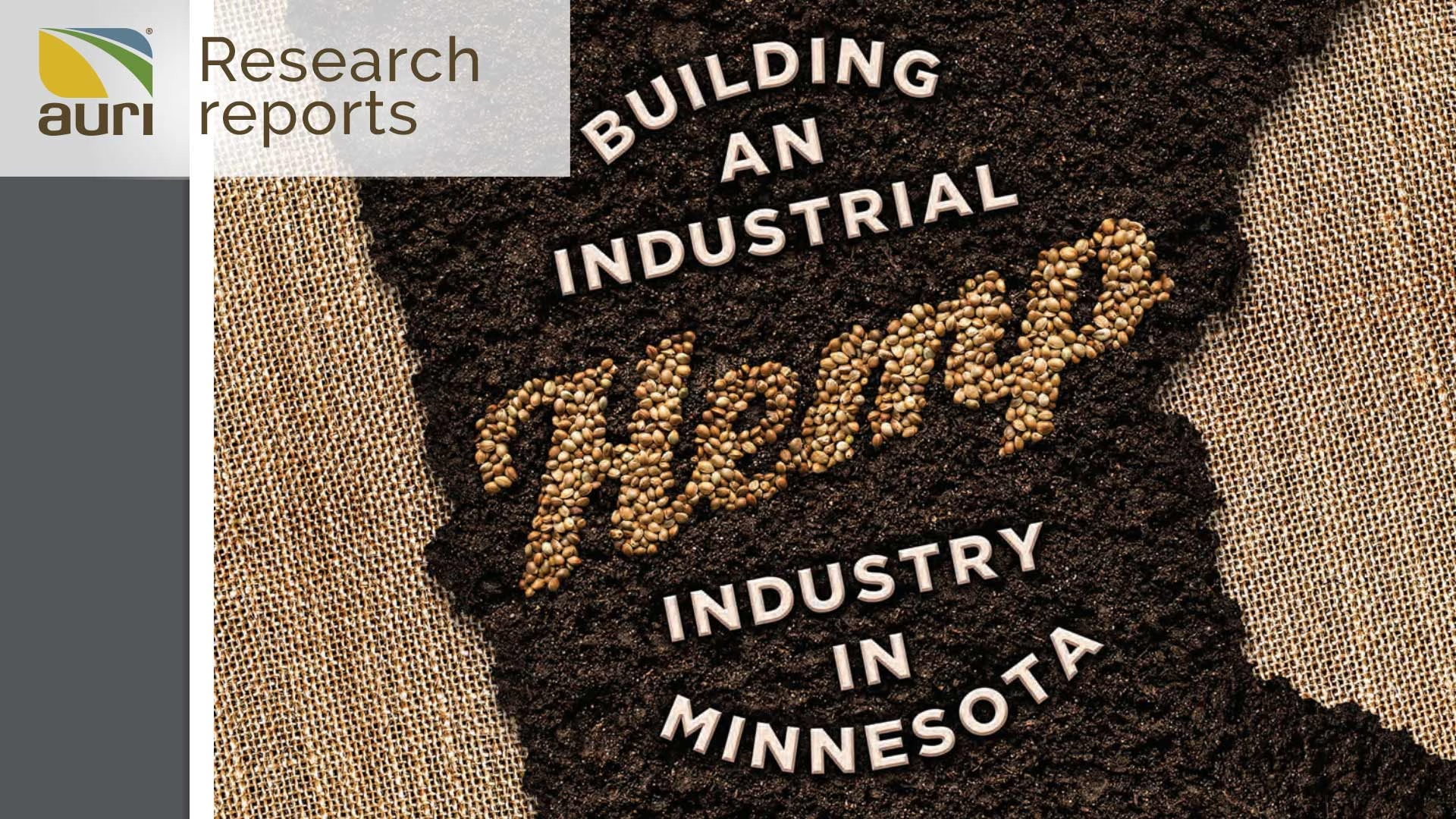
Building an Industrial Hemp Industry In Minnesota

For growers, governments, supply chain sectors and end users who are engaged in the emerging hemp industry in Minnesota.

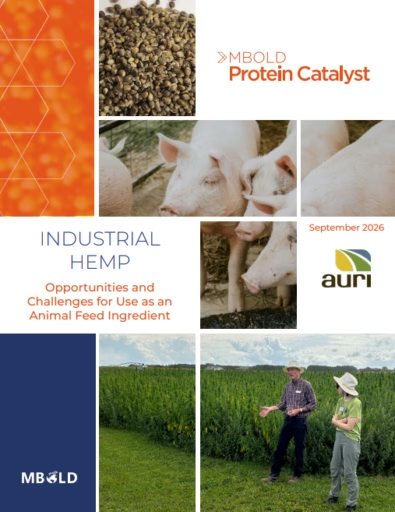
Industrial Hemp: Opportunities and  Challenges for Use as an  Animal Feed Ingredient

As part of its Protein Catalyst initiative, the MBOLD Coalition commissioned an assessment to evaluate opportunities to incorporate industrial hemp seed meal into animal feed rations and contribute to the…

Green Ammonia:  A Low Carbon Solution and Economic Driver for Rural Minnesota

Update to 2023 AURI Report “Securing a Better Future Through the Development of Green Ammonia Fertilizer Pathways” Read the full report

RePlay Pavement Preservation and Life-Cycle Cost Analysis (Phase 2)

Potential for cost savings is an important driver for new asphalt pavement preservation techniques. This study evaluated the cost effectiveness of RePlay Agricultural Oil and Preservation Agent® (“RePlay”), a biobased…

Navigating Challenges: Minnesota’s Food and Agriculture Manufacturers and Processors Supply Chains

This report illustrates the impact of the novel Coronavirus Disease (COVID) on supply chains for Minnesota food and agriculture manufacturers and processors. A collaboration providing services to Minnesota food and agricultural economic sectors wanted to better understand the supply chain effects of COVID, the resulting pain points and what may be needed to help identify potential new services, resources and supportive actions that would improve supply chain resiliency for Minnesota businesses.

Hemp Research

Building an Industrial Hemp Industry In Minnesota

AURI is pleased to present this preview of an upcoming Minnesota Hemp Value Chain Analysis report to the growers, governments, supply chain sectors and end users who are engaged in the emerging hemp industry in Minnesota.

Biomass for Cooling System Technologies: A Feasibility Guide

Information detailed in this study guide can be utilized to make informed decisions on the feasibility of utilizing a biomass system, whether as a main source of heating and cooling or as an auxiliary system. It serves as a potential opportunity to reduce heating and cooling cost, especially if the current energy source being used is propane or fuel oil.

Adding value to corn and agricultural byproducts through production of biochar and bio-oil: Step Two

The potential long-term outcome of this research is the development and promotion of on-farm energy production using a combination of corn stover and distillers grain as a feedstock to improve the sustainability of corn production with biochar amendments.

Recovering valuable biobased products from thin stillage (CDS) in corn ethanol plants

Thin stillage from corn ethanol plants is currently utilized by adding it to DDG and subsequently drying the blended streams to yield DDGS. This is convenient since it avoids treating the thin stillage as a waste stream. Generating new value-added products from the thin stillage stream offers an opportunity to add more positive cash flow to the equation independent of corn prices.

Economic Contribution of the Agbioscience Industry: Northeast Minnesota

Agbioscience is a critical component of Northeast Minnesota’s past and future. A new research report shows that in 2013 agbioscience supported $2.1 billion in economic impact—seven percent of the region’s total economic output. And with the right steps and action, agbioscience could drive additional long-term prosperity in this region of the state—potentially growing to an estimated $2.9 billion in output in 2016.

Durable bio resin development for commercialization of complex products

This project was driven by the building and trade industry’s desire for an alternative to many petroleum base resins. The industry is looking for cost stability, sustainable and comparable bio resin options.

Economic Contribution of the Agbioscience Industry: Northwest Minnesota

Agbioscience is a critical component of Northwest Minnesota’s past and future. A new research report shows that in 2013 agbioscience supported $789.4 million in economic impact—five percent of the region’s total economic output. And with the right steps and action, agbioscience could drive additional long-term prosperity in this region of the state—potentially growing to $1.3 billion in economic output in 2016.

Economic Contribution of the Agbioscience Industry: Central Minnesota

Agbioscience is a critical component of Central Minnesota’s past and future. A new research report shows that in one year alone agbioscience supported $2 billion in economic impact—four percent of the region’s total economic output. And with the right steps and action, agbioscience could drive additional long-term prosperity in this region of the state—potentially growing to $3.1 billion in economic output in 2016.

Economic Contribution of the Agbioscience Industry: Southwest Minnesota

Agbioscience is a critical component of Southwest Minnesota’s past and future. A new research report shows that in one year alone agbioscience supported $2.6 billion in economic impact—eight percent of the region’s total economic output. And with the right steps and action, agbioscience could drive additional long-term prosperity in this region of the state—potentially growing to $4.3 billion in economic output in 2016.

Economic Contribution of the Agbioscience Industry: West Central Minnesota

“This report helps us understand what the agbioscience industry contributes to our region’s economy,” says Sandy King, interim CEO for West Central Initiative. “Through this information, we hope to be able to better understand this industry and how we can work together to grow west central Minnesota’s economy.”

Economic Contribution of the Agbioscience Industry: Southeast Minnesota

“This research report reinforces what we know is a critical strength for our region—agriculture and the associated biosciences—and, specifically, value-added food production,” says Tim Penny, president and CEO for the Southern Minnesota Initiative Foundation (SMIF). “We hope to be able to capitalize on this strength as one part of our efforts to build a strong future for this region.”

Economic Contribution of the Agbioscience Industry in Greater Minnesota

“This initiative is about creating a vision and strategy to transform Minnesota’s fundamental strength in agriculture into leading-edge innovation and economic growth for the state,” says the Institute’s Executive Director Teresa Spaeth.

Investigate polymerization of lactose by twin screw extrusion

Dietary fibers are a growing food ingredient market. Oligosaccharides are prebiotic fiber compounds that enhance the digestive health of the lower gastrointestinal tract. This study uses twin-screw extrusion of lactose with an acid catalyst to polymerize lactose to oligosaccharides or polylactose. 

Marketplace opportunities for integration of biobased and conventional plastics

The bioplastics industry is continuing to grow and expand. This report looks at the biobased materials industry in Minnesota.

Higher value product from corn ethanol

This project researched the chemical conversion of bioethanol to produce a more valuable commodity chemical, ethylene carbonate, and determine if this conversion is viable on an industrial scale. 

New report projects Minnesota could be global leader in agbioscience

A new report out shows that Minnesota’s economic future may well be rooted in its historic leadership in agricultural production.

Ethanol industry coproducts in swine liquid feeding: Aspects on nutritional value, welfare and carcass characteristics of wean-to-finish pigs

A major ingredient in pig’s feed is corn. The use of corn in ethanol production also results in the generation of byproducts that have the potential to be used for feeding pigs. One byproduct of dry ethanol production is wet corn solubles. In most of the ethanol plants in Minnesota, this byproduct is sprayed on distiller grains to produce distiller grains and solubles (DGS). DGS are then dried to produce Distillers Dried Grains and Solubles (DDGS) to avoid deterioration in quality and to increase keeping quality. However, the drying process is very energy consuming. This study looked at the effects of using a liquid feeding system on the growth rates of pigs.

Effect of finishing cattle on low fat distillers grains on animal performance and carcass and meat characteristics

High fat and high sulfur concentrations in traditional distillers grains plus solubles limit inclusion rates in feedlot cattle diets. High dietary sulfur concentrations are known to affect intake, potentially impacting health and performance of cattle. The objective of this study was to determine the effect of differing dietary concentrations of roughage and sulfur in beef cattle feedlot finishing diets.

Interaction of distillers grains on sulfur concentration and dietary roughage on microbial fermentation

Read the complete report: Interaction of distillers grains on sulfur concentration and dietary roughage on microbial fermentation About this report: The increase in ethanol production has provided Minnesota feedlot operators…

Determination of potential human health benefits from diets containing corn distillers coproducts

Read the complete report: Determination of potential human health benefits from diets containing corn distillers coproducts About this report: The goal of this project was to identify whether there were…

Implications of corn producer participation in stover biomass markets and availability

Read the complete report: Implications of corn producer participation in stover biomass markets and availability About this report: Growing the next generation of renewable fuels is an important part the…

Biofilm formation on dairy separation membranes as affected by the substrate and cheese starter

Read the report: Biofilm formation on dairy separation membranes as affected by the substrate and cheese starter About this report: The objectives of the project are: 1) to study the…

How Alternative Feed Ingredients Affect Poultry Dietary Electrolyte Balance

Read the complete report: How Alternative Feed Ingredients Affect Poultry Dietary Electrolyte Balance About This Report Dried distillers grains with solubles (DDGS), derived primarily from corn in the Midwest, are…

Mechanical Dewatering Technologies for Wet Biomass Feedstocks

Read the complete report: Mechanical Dewatering Technolgies for Wet Biomass View the presentation: Dewatering Technologies for Wet Biomass About This Report Many wet biomass feedstocks generally have low value due…

Midwest Biomass Inventory Assessment

The objective of this study was to determine potential biomass resources within the Midwest for thermal heating applications in order to provide a “snapshot” of the Midwest Biomass Inventory Assessment…

Finishing cattle performance and carcass quality when fed high protein dried distillers grains

The research objective of this experiment was to replace 35% of dry rolled corn in traditional corn-based feedlot diets with a high protein dried distillers grains and view its effects…

Biobased Materials: Minnesota’s Opportunity & Challenge, A Focus on Bioplastics

As the interest and use of biobased products grows, so do the opportunities and challenges. According to a recent report sponsored by AURI and the Minnesota Soybean Research and Promotion…

Evaluation of different cleaning agents for the removal of membrane biofilms

Read the report: Evaluation of different cleaning agents for the removal of membrane biofilms About this report: Dairy concentration membranes are prone to biofouling, which leads to their reduced performance…

Modifications in the CIP protocols for removing biofilms on whey RO membranes

Read the report: Modifications in the CIP protocols for removing biofilms on whey RO membranes About this report: This report looks to evaluate a typical Common Industry Protocol, CIP, protocol…

Role of bacterial cell-dairy separation membrane interaction on biofilm formation

Read the report: Role of bacterial cell-dairy separation membrane interaction on biofilm formation About this report: The purpose of this report was to study the role of bacterial cell and…

Corn Cobs as Sustainable Biomass for Renewable Energy, A Field-to-Facility Demonstration and Feasibility Study

The corn cob field-to-facility project is a success in that it has demonstrated and documented the viability of corn cobs as a sustainable source of biomass for renewable energy. The…

A Study Assessing the Opportunities and Potential of Soybean-Based Products and Technologies – Informa Soybean Report

Comprehensive report on new opportunities for soybean growers in Minnesota. File Attached: Informa_Soybean_Report_Final.pdf

More to Explore

field
See How We Can Partner to Make Your Idea a Reality
Ava - Accessibility Widget